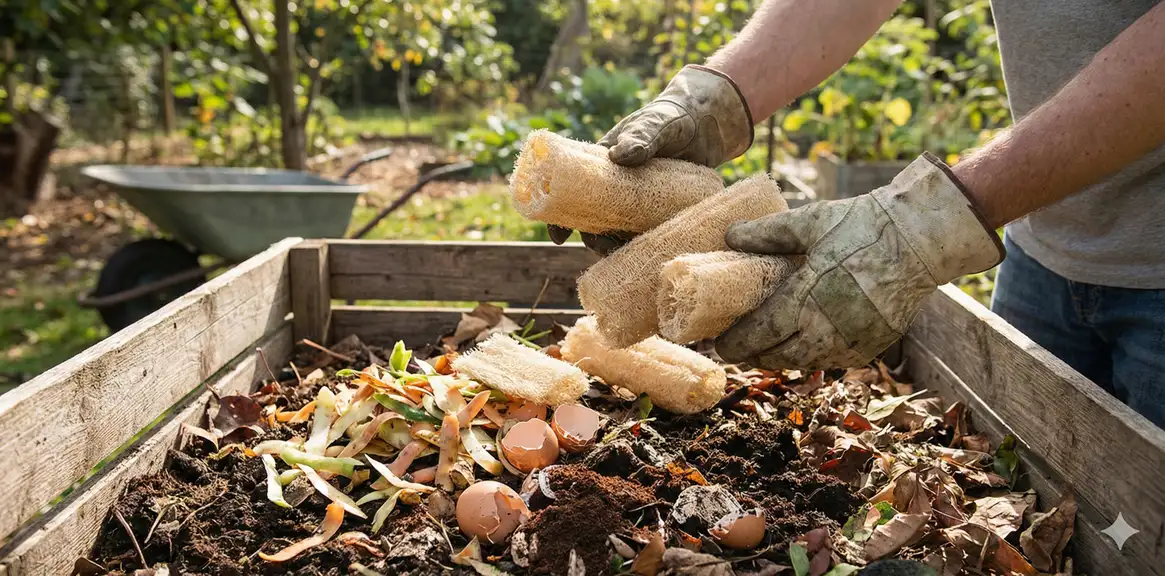
One of the most compelling reasons to grow and use loofah sponges is their complete biodegradability. Unlike synthetic sponges that persist in landfills for hundreds of years, every part of the loofah plant returns to the earth naturally. Understanding how to properly compost your loofah waste completes the sustainable cycle and enriches your garden soil. This practice is key to reducing waste in your household.
Composting loofah is part of a broader approach to closing the loop in sustainable homesteading. Whether you're composting bath sponges, kitchen scrubbers, or waste from processing your own loofahs, this guide covers everything you need to know.
Why Loofah Composts Well
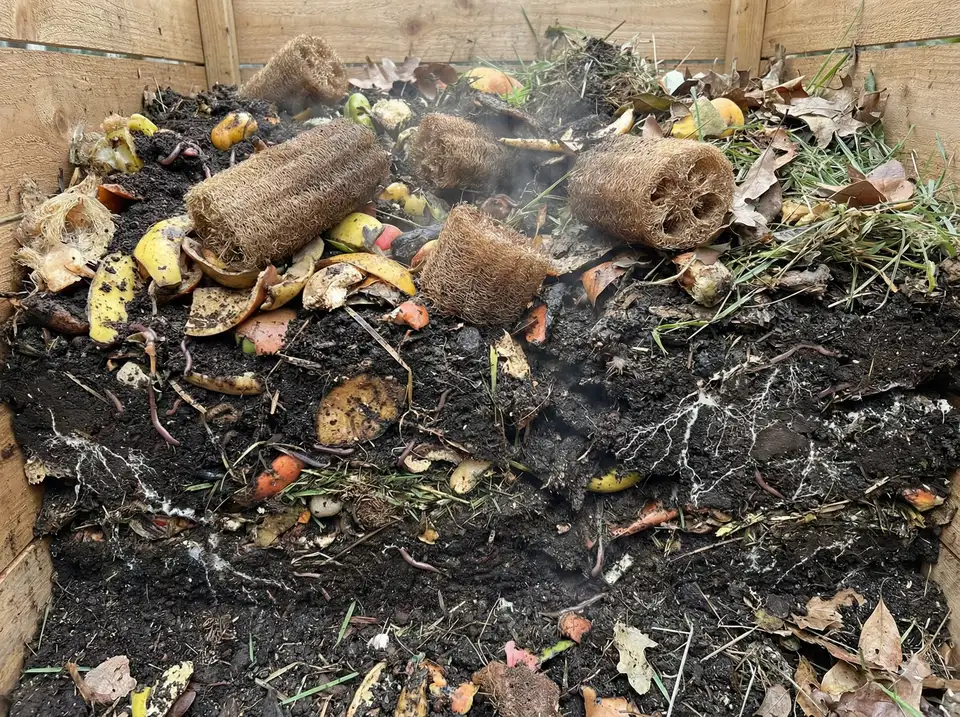
Loofah sponges are made entirely of cellulose fibers from the Luffa aegyptiaca or Luffa acutangula gourd. This natural composition makes them ideal for composting. The fibrous structure provides excellent carbon material that helps balance nitrogen-rich "green" additions to your compost pile. For more details on composting loofah products, see our complete guide.
The cellulose breaks down through microbial action, just like other plant materials. Unlike plastic sponges that release microplastics, composting loofah enriches your soil with organic matter, improves soil structure, and returns nutrients to your garden ecosystem.
- 100% natural cellulose fiber structure
- No synthetic materials or plastic components
- High carbon content for compost balance
- Porous structure allows microbial colonization
- Breaks down completely without residue
Recommended Composting Supplies
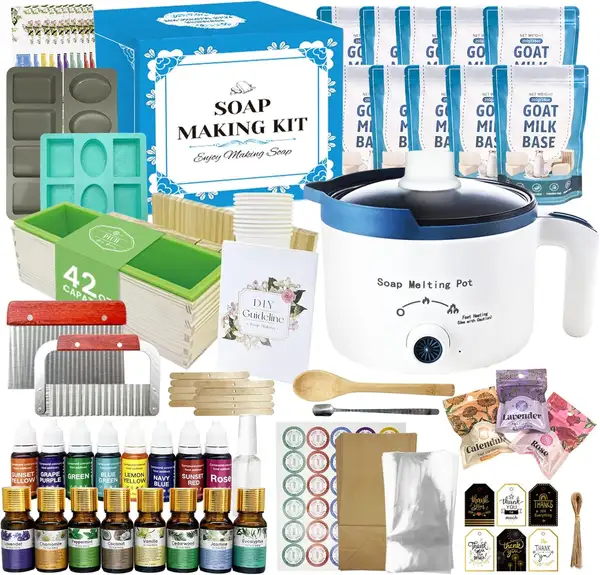
PIUH Complete Goat Milk Soap Making Kit
All-in-one soap making kit with goat milk base, molds, dried flowers, and essential tools. Ideal starter kit for beginners wanting to create loofah soap bars.
Check Price on Amazon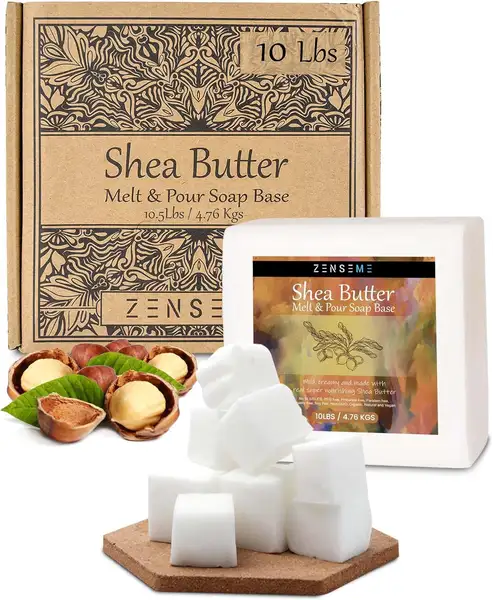
Premium Shea Butter Soap Base (10 lbs)
Premium melt-and-pour soap base enriched with shea butter for extra moisturizing properties. Perfect for embedding loofah slices in luxurious, skin-nourishing bars.
Check Price on AmazonAs an Amazon Associate, we earn from qualifying purchases.
Preparing Loofah for Composting
Proper preparation accelerates decomposition and ensures your loofah waste composts effectively. The key is increasing surface area and ensuring the material is free from contaminants that could harm beneficial compost microorganisms.
Cut into Small Pieces
The single most important step is cutting your loofah into smaller pieces. Whole loofahs can take significantly longer to break down. Using kitchen shears or heavy-duty scissors, cut used sponges into 1-2 inch pieces. The increased surface area allows microbes to access more of the material simultaneously, speeding decomposition from months to weeks.

Clean Before Composting
If you've used your loofah with chemical cleaners, soaps, or body products, rinse thoroughly before adding to compost. While small amounts of natural soap won't harm compost, chemical residues, bleach, or synthetic fragrances can kill beneficial bacteria. For loofahs used exclusively with natural products, a simple rinse is sufficient.
Remove Non-Compostable Items
Check for and remove any attachments like plastic loops, synthetic strings, or elastic bands that manufacturers sometimes add. Some commercial loofahs come in mesh bags - these synthetic materials must be separated before composting.
- Soak cut pieces overnight to increase moisture content
- Mix with nitrogen-rich materials like grass clippings
- Layer loofah pieces throughout the pile rather than dumping in one spot
- Turn your compost pile regularly to introduce oxygen
- Consider running pieces through a chipper/shredder for ultimate breakdown speed
Hot vs. Cold Composting Loofah
The composting method you choose significantly affects how quickly your loofah waste breaks down. Both methods work, but they require different timeframes and levels of involvement.
Hot composting creates an environment where temperatures reach 130-160°F (54-71°C), accelerating microbial activity. In a well-managed hot compost system, cut loofah pieces will fully decompose in 4-6 months. The high temperatures also kill any seeds or potential pathogens.
To hot compost loofah effectively, maintain a carbon-to-nitrogen ratio of about 30:1, keep the pile moist like a wrung-out sponge, and turn it weekly. The loofah counts as "brown" carbon material, so balance it with "green" nitrogen sources like kitchen scraps or fresh grass clippings.
Cold composting requires less effort but more patience. Simply add your prepared loofah pieces to your compost pile and let nature take its course. Without the accelerated microbial activity of hot composting, expect 6-12 months for complete decomposition. The exact timeframe depends on piece size, moisture levels, and ambient temperature.
Cold composting works well for home gardeners who want a low-maintenance approach. While slower, it still produces quality compost and completes the sustainable loofah lifecycle.
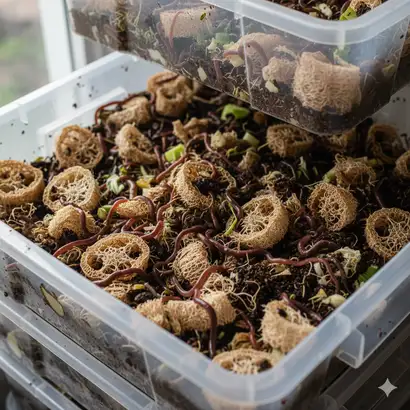
What Affects Decomposition Timeframe
Several factors influence how quickly your loofah waste breaks down in compost. Understanding these variables helps you optimize your composting process.
- Particle Size: Smaller pieces decompose exponentially faster. A whole loofah might take 18+ months, while 1-inch pieces break down in 4-6 months under the same conditions.
- Moisture Content: Microbes need water to function. Too dry, and decomposition stalls. Too wet, and you create anaerobic conditions that slow breakdown and create odors. Aim for 40-60% moisture.
- Temperature: Warmer temperatures accelerate microbial activity. Summer composting proceeds much faster than winter. In cold climates, decomposition may pause during freezing months.
- Oxygen Availability: Aerobic bacteria decompose material much faster than anaerobic ones. Regular turning introduces oxygen and can cut decomposition time in half.
- Carbon-to-Nitrogen Ratio: Loofah is high in carbon. Without adequate nitrogen sources, decomposition slows. Balance your pile with nitrogen-rich materials for optimal results.
Using Finished Loofah Compost
Once your loofah has fully decomposed into dark, crumbly, earth-smelling compost, it's ready to return nutrients to your garden. This nutrient-rich amendment improves soil structure and supports healthy plant growth. The finished compost provides excellent organic matter for gardens.
The finished compost works beautifully as a soil amendment for vegetable gardens, flower beds, and even for starting next year's loofah seeds. Mix it into potting soil at a ratio of 1:3 (one part compost to three parts soil) or spread a 2-3 inch layer over garden beds as mulch.
Because loofah adds primarily carbon and improves soil structure rather than providing heavy nutrients, it pairs well with balanced organic fertilizers. You can also use your composted loofah as loofah as garden mulch around established plants. The fibrous nature of the original material helps create air pockets in dense soils and improves water retention in sandy soils.

- Mix into potting soil for improved drainage and aeration
- Spread as mulch around established plants
- Add to raised bed soil mixes for structure
- Use as top dressing for lawns and ornamental beds
- Incorporate into seed-starting mixes
Composting Other Loofah Plant Waste
Don't limit yourself to just composting used sponges. Every part of the loofah plant is compostable and adds value to your pile. Understanding how to handle different plant materials maximizes your sustainable practice.
Vines and Leaves
Loofah vines and leaves are nitrogen-rich "green" materials that complement the carbon-rich sponges perfectly. After the growing season ends, chop vines into 6-12 inch sections and add them to your compost pile. The green material balances the brown sponge material, creating an ideal carbon-to-nitrogen ratio.
Fresh loofah leaves decompose quickly, often within 4-6 weeks in an active compost pile. Woody stems take longer - consider running them through a chipper or letting them dry and breaking them into smaller pieces.
Immature Gourds
Not every loofah reaches maturity. Small, damaged, or frost-bitten gourds can go straight into compost. Young loofahs still have moisture and haven't developed the tough fiber structure yet, making them high-nitrogen green material. Cut them into quarters before adding to speed decomposition.
Seeds and Seed Casings
Loofah seeds are viable and may sprout if composted in a cold pile. If you're hot composting (temperatures above 130°F), the heat will kill seeds. For cold composting, either remove seeds for next year's planting or accept that you might get volunteer loofah plants where you spread the finished compost.

What NOT to Compost
While natural loofah is completely compostable, certain conditions or treatments make some loofah materials unsuitable for home composting. Recognizing these exceptions protects your compost quality and soil health.
- Bleached loofahs: Commercial whitening treatments introduce chemicals harmful to compost microbes
- Dyed synthetic loofahs: "Loofah-style" plastic sponges never biodegrade - identify by melting test
- Heavily perfumed loofahs: Synthetic fragrances contain chemicals that persist in soil
- Loofahs with mold or mildew: While natural, these can introduce plant pathogens - better to dispose separately
- Attached synthetic materials: Plastic loops, polyester strings, rubber bands must be removed first
If you're uncertain whether a loofah is natural or synthetic, perform a simple burn test. Cut a small piece and use tweezers to hold it over a flame. Natural loofah burns like paper and leaves ash. Synthetic materials melt, produce black smoke, and leave plastic residue.
Frequently Asked Questions
While whole loofahs will eventually decompose, cutting them into 1-2 inch pieces reduces composting time from 18+ months to just 4-6 months. The increased surface area allows microbes to access more material simultaneously. For best results, always cut loofah into smaller pieces before composting.
In hot compost (130-160°F), cut loofah pieces decompose in 4-6 months. Cold composting takes 6-12 months. Whole loofahs can take 18+ months. Factors affecting speed include piece size, moisture level, temperature, and whether you turn the pile regularly.
Only natural loofahs made from the luffa plant are biodegradable. Many "loofah-style" bath sponges are actually made from plastic or synthetic materials that never decompose. Check labels carefully - true loofahs are labeled as "natural," "plant-based," or "luffa gourd." If uncertain, perform a burn test to identify synthetic materials.
Yes, finished loofah compost is excellent for vegetable gardens. It improves soil structure, increases water retention, and adds organic matter. Ensure your loofahs were free from chemical cleaners before composting. The compost works especially well mixed into soil at planting time or used as mulch around established plants.
Yes, rinse loofahs to remove soap residue, body oils, and any chemical cleaners before composting. Small amounts of natural soap won't harm compost, but bleach, synthetic fragrances, and harsh chemicals can kill beneficial microbes. If you've used your loofah exclusively with natural products, a simple water rinse is sufficient.