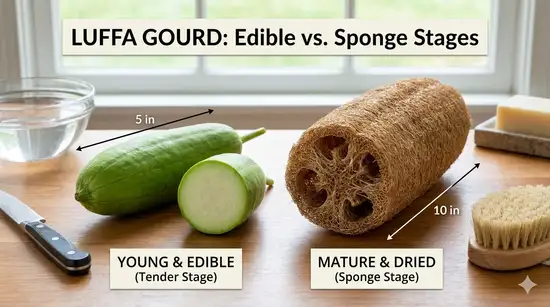
The loofah plant produces gourds that are definitely edible when harvested young. In fact, millions of people across Asia eat luffa regularly as a staple vegetable. The edible variety is botanically known as Luffa aegyptiaca (smooth luffa) or Luffa acutangula (ridged luffa or angled luffa), and both are grown specifically for food in China, Vietnam, India, the Philippines, and many other countries.
The critical factor is harvest timing. Young luffa gourds - typically 4 to 8 inches in length - are tender, juicy, and have a delicate flavor profile similar to cucumber or zucchini. Understanding the nutritional value of luffa helps appreciate why this vegetable is so popular in Asian cuisines.
Recommended Products for Cooking Edible Luffa

Babish Carbon Steel Flat Bottom Wok (14-Inch)
Restaurant-quality wok for authentic luffa stir-fry - works on all stovetops including induction
Check Price on AmazonAs an Amazon Associate, we earn from qualifying purchases.
Is Loofah Edible? The Short Answer
If you've only encountered loofah as a dried bath sponge, you might be shocked to learn that same fibrous scrubber was once a tender, delicious vegetable. The transformation happens as the gourd matures - water content decreases, fibers develop and harden, and the flesh becomes inedible. But catch it early, and you have yourself a nutritious, versatile vegetable perfect for learning how to cook edible luffa.
When Is Loofah Best for Eating?
Timing is everything when it comes to eating luffa. The window of optimal edibility is relatively short, so knowing when to harvest young for eating is crucial for both home growers and shoppers at Asian markets.
Ideal Harvest Size for Eating
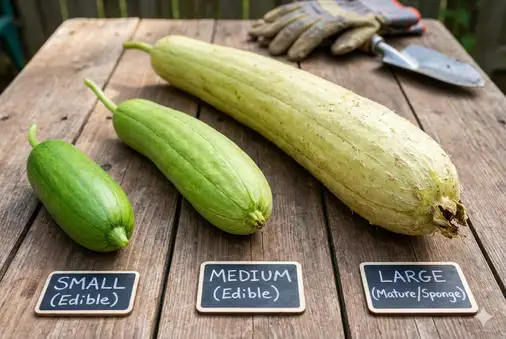
The sweet spot for edible luffa is when the gourd reaches 4 to 8 inches in length. At this size:
- The skin is still relatively thin and tender
- The flesh has maximum water content (around 95%)
- Seeds are tiny, soft, and barely noticeable
- The texture is crisp yet tender when cooked
- The flavor is mild, slightly sweet, and pleasant
- Days 3-7 after flowering: Very tender baby luffa (3-4 inches)
- Days 7-12 after flowering: Optimal eating stage (4-8 inches)
- Days 12-20 after flowering: Getting fibrous (8-12 inches)
- Days 20+ after flowering: Mature, developing sponge structure (12+ inches)
Visual and Physical Indicators
When selecting or harvesting luffa for eating, look for these characteristics:
- Bright green color: The skin should be vibrant green without yellowing
- Firm but not hard: Gently squeeze - it should yield slightly but feel substantial
- Smooth or ridged skin: Depending on variety, but without rough, corky patches
- No brown spots: Brown areas indicate over-maturity or damage
- Fresh-looking stem: The stem end should look recently attached, not dried out
Can You Eat Mature Loofah?
This is where many people get confused. Technically, you can eat mature loofah, but you really shouldn't - and here's why.
As luffa matures beyond 10-12 inches, several changes make it increasingly unpalatable:
- Fiber development: The vascular bundles that will eventually become the "sponge" start hardening throughout the flesh
- Bitter compounds: Cucurbitacins (bitter compounds) increase dramatically in mature gourds
- Texture changes: The once-tender flesh becomes tough, stringy, and unpleasant to chew
- Lower water content: Moisture decreases from 95% to around 80% or less
- Developed seeds: Seeds become large, hard, and woody
If a luffa gourd tastes intensely bitter, stop eating it immediately. While rare, extremely bitter luffa can indicate high levels of cucurbitacins, which in large quantities can cause digestive upset. This is more common in stressed plants or cross-pollinated varieties.
Is the Loofah Sponge the Same as the Vegetable?
Yes - and this is the source of most confusion about edible loofah. The loofah sponge hanging in your shower and the luffa vegetable in an Asian grocery store come from the exact same plant species, just harvested at dramatically different life stages.
Understanding the Transformation
- Young/Immature (3-8 inches): Tender, juicy, mild flavor, minimal fibers - cook like zucchini
- Transitioning (8-12 inches): Developing fibers, becoming bitter, tougher texture - not ideal for either use
- Mature/Drying (12-24 inches): Fibrous network forming, skin hardening, turning brown - wait for sponges
- Fully Mature (12-24 inches): Brown, lightweight, dried fibrous skeleton - harvest for bath sponges
Why the Dual Purpose Matters
Many gardeners face a practical decision: harvest young for eating, or let mature for sponges. You can't have both from the same gourd. For dual-purpose loofah growing, consider these strategies:
- Plant more: Grow enough plants to harvest some young for eating and leave others to mature
- Sequential harvesting: Take the first gourds young for eating, let later-season fruits mature for sponges
- Variety selection: Some varieties are better for eating (like angled luffa), while smooth luffa makes superior sponges
Learn more about uses for young loofahs at various maturity stages.
What Parts of Luffa Are Edible?
When harvested at the proper young stage, nearly all parts of the luffa gourd are edible. Understanding preparing for eating helps you get the most from this versatile vegetable.
The Main Flesh (Most Common)
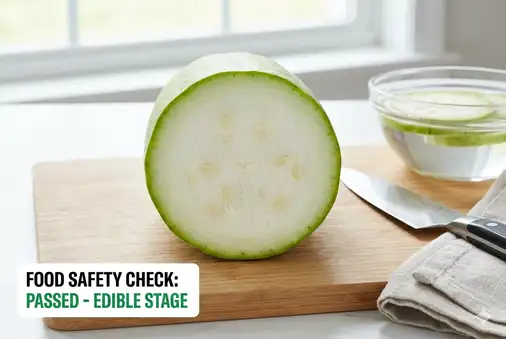
The white to pale green flesh inside the gourd is the primary edible portion. This is what you'll see in recipes and at markets. The flesh has a spongy, slightly crisp texture when raw, becoming silky and tender when cooked. It readily absorbs flavors from broths, sauces, and seasonings.
The Skin (Usually Removed)
For ridged luffa (Luffa acutangula), the skin is typically peeled before cooking because the ridges can be tough and bitter. Very young, tender specimens under 4 inches can sometimes be eaten with skin after thorough scrubbing.
The Seeds (When Immature)
In young luffa, the seeds are tiny, soft, and barely formed - completely edible and unnoticeable when cooked. As the gourd matures, seeds enlarge and harden. By the time luffa reaches 8-10 inches, you might want to scoop out larger seeds before cooking.
The Flowers (Bonus Delicacy)
Male luffa flowers are edible and considered a delicacy in some cuisines. They can be stuffed and fried (like squash blossoms), added to soups for a delicate flavor, or stir-fried with garlic and light seasonings.
Are There Any Toxic Parts?
Luffa is generally safe to eat when harvested young, but there are a few considerations to keep in mind.
Bitterness as a Warning Sign
The most important safety indicator is taste. If your luffa tastes extremely bitter - far more bitter than typical vegetables - stop eating it. Intense bitterness indicates high levels of cucurbitacins, toxic compounds found in the cucurbit family.
While cucurbitacins in normal amounts are harmless, concentrations high enough to make the vegetable inedibly bitter can cause:
- Nausea and vomiting
- Abdominal cramping
- Diarrhea
- In severe cases (very rare), more serious digestive issues
- Only eat young, tender luffa gourds (4-8 inches)
- Taste a small piece raw - if extremely bitter, discard
- Cook thoroughly for best digestibility
- Source from reputable growers or markets
- If growing your own, use established edible varieties
- Store properly and use within a few days of harvest
How to Tell If Luffa Is Too Old to Eat
Learning to identify over-mature luffa saves you from disappointing (or unpleasant) culinary experiences.
Visual Indicators
- Size: Generally, anything over 10-12 inches is suspect. The larger it gets, the more fibrous it becomes
- Color changes: Yellowing skin, especially at the stem end, indicates over-maturity
- Skin texture: Rough, corky patches indicate fiber development
- Dull appearance: Fresh young luffa has a vibrant, almost glossy green
Physical Feel Tests
- Weight: Young luffa feels heavy for its size due to high water content. If it feels light and hollow, it's too old
- Firmness: Gentle pressure should meet some resistance but with slight give. Rock-hard = too old
- Sound test: Tap the gourd. A dull thud means good water content. A hollow, rattling sound means seeds have dried
Common Misconceptions About Edible Loofah
Let's clear up some persistent myths and misunderstandings about eating luffa.
Reality: No amount of cooking will make a mature, dried loofah sponge edible. Once the fibrous structure has developed and dried, it's simply not food. The "loofah" you eat is harvested months before it would become a sponge.
Reality: Fresh edible luffa is readily available at Asian supermarkets, particularly Chinese and Vietnamese grocery stores, during summer and fall. You can also easily grow edible and useful gourds from seed.
Reality: While low in calories, young luffa provides vitamin C, vitamin A, dietary fiber, and various minerals including potassium and magnesium. It's 95% water, making it excellent for weight management.
Reality: Properly harvested young luffa should have a mild, slightly sweet flavor similar to cucumber or zucchini. If it tastes bitter, either it's too mature, or something went wrong during growing.
Frequently Asked Questions
Young luffa has a very mild, slightly sweet flavor similar to a cross between zucchini and cucumber. The taste is delicate and neutral, which makes it perfect for absorbing the flavors of whatever sauce, broth, or seasonings you cook it with. The texture is what really shines, becoming silky and tender when properly cooked.
While technically safe to eat raw when very young, luffa is rarely consumed uncooked. Raw luffa can be slightly tough and doesn't have much flavor. For the best experience, cook it - even brief cooking (5-7 minutes) transforms the texture to tender and silky while bringing out subtle sweetness.
Look for fresh luffa at Asian supermarkets, particularly Chinese, Vietnamese, or Filipino grocery stores. It's usually in the fresh produce section, often labeled as "Chinese okra," "angled luffa," "ridged gourd," "silk squash," or "sponge gourd." It's most available during summer and early fall.
No, absolutely not. Bath loofahs are mature, dried gourds that have lost all edible qualities. The fibrous structure is like eating a rough sponge - inedible, unpleasant, and potentially unsafe if the loofah has been processed with chemicals. Edible luffa must be harvested young.
Fresh, uncut luffa will keep in the refrigerator for 4-7 days. Store it unwashed in a plastic bag in the crisper drawer. Once cut, use within 2-3 days as the cut surfaces dry out and deteriorate quickly. For longest shelf life, wait to peel and cut until just before cooking.