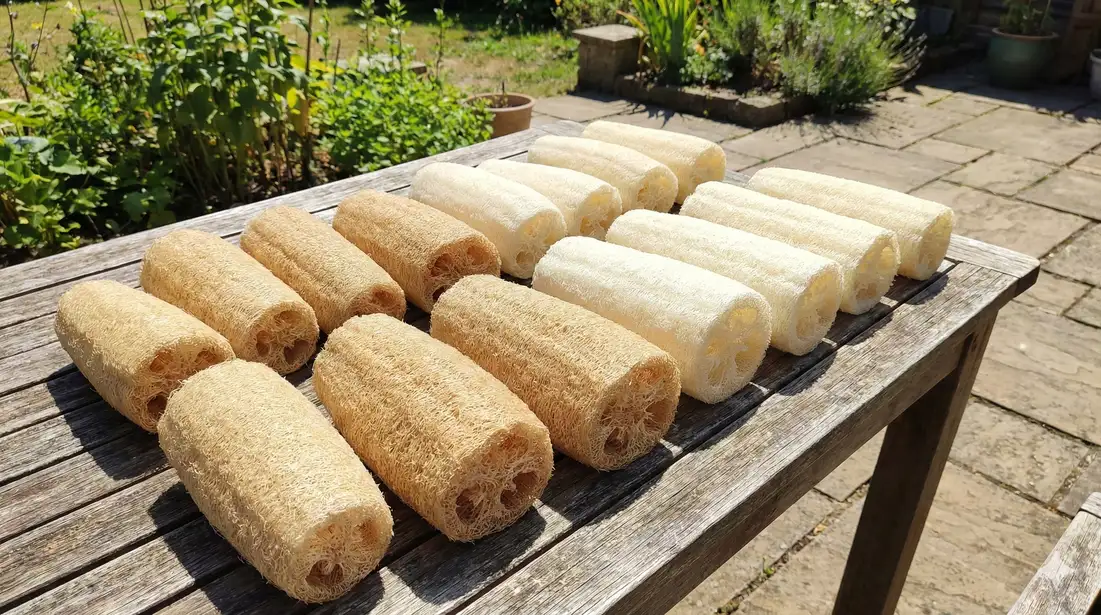
After successfully processing your homegrown loofah sponges, you might be disappointed by their natural tan or brown color. While perfectly functional, many people prefer the pristine white appearance of store-bought sponges. The good news is you can achieve that bright white look using completely natural, safe bleaching methods.
This guide covers proven techniques for naturally whitening loofah sponges without harsh chemicals. Whether you choose the patient sun bleaching method or faster hydrogen peroxide treatment, you'll learn exactly how to safely lighten your dried loofah gourds while maintaining their durability and exfoliating properties.
Recommended Growing Supplies
KVITER Heirloom Luffa Seeds (40 Count)
Fast-sprouting non-GMO seeds with 90%+ germination - grow your own natural sponges in one season
Buy on Amazon
GooingTop Full Spectrum LED Grow Light with Timer
Start loofah seeds indoors months early - adjustable height and automatic timer for hands-free growing
Buy on AmazonAs an Amazon Associate, we earn from qualifying purchases.
Why Bleach Loofah Sponges?
Before diving into bleaching methods, it's worth understanding why people bleach their loofahs and whether it's necessary for your needs.
Aesthetic Appeal
The primary reason for bleaching loofah is purely cosmetic. Natural loofahs range from cream to tan to light brown, depending on the variety and drying conditions. Many people associate the bright white color with cleanliness and prefer it for:
- Gift-giving and selling at markets
- Matching bathroom decor
- Creating a spa-like aesthetic
- Crafts and decorative projects
When NOT to Bleach
You can skip bleaching if you prefer the natural, earthy look, are growing organic loofahs, plan to use them for dishes where color doesn't matter, or want to avoid any processing beyond basic cleaning.
Sun Bleaching Method (Most Natural)
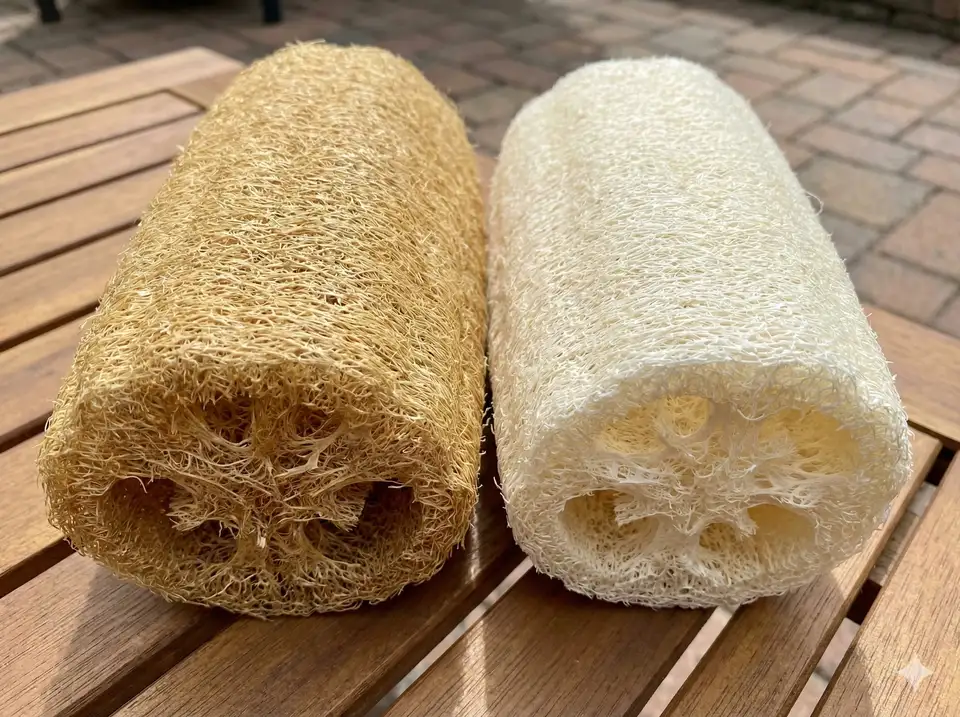
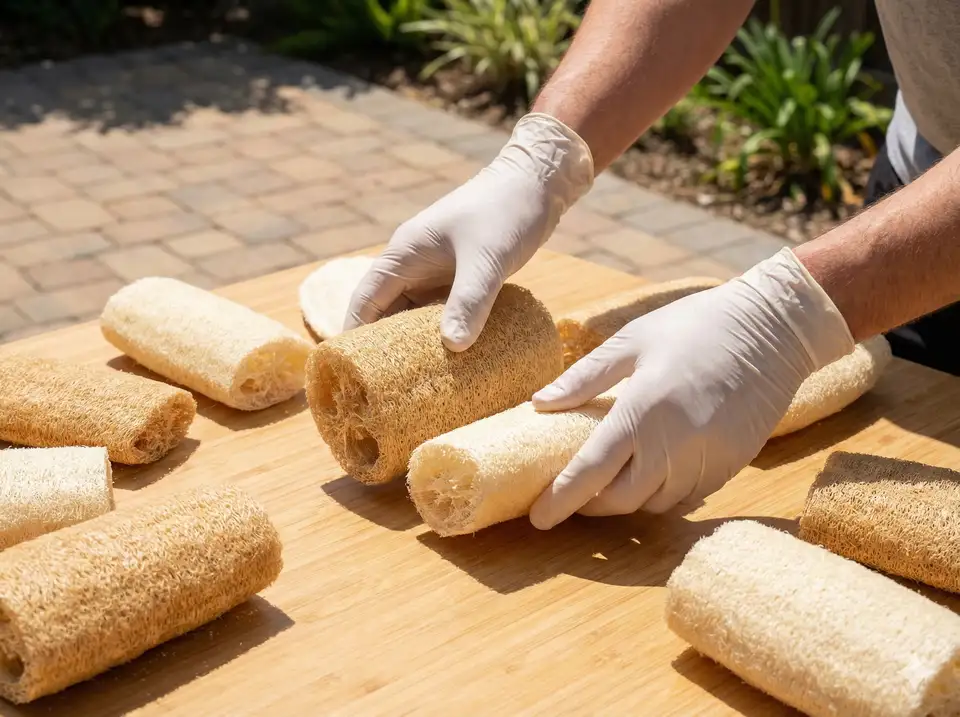
Sun bleaching is the gentlest, most natural way to whiten loofahs. This method uses UV rays from sunlight to naturally break down pigments, resulting in a gradual whitening effect with zero chemicals.
What you need: Clean, dry loofah sponges, a sunny outdoor location, and patience.
Step-by-step instructions:
- Start with clean loofahs: Ensure your sponges are thoroughly cleaned and dried after processing
- Choose the location: Place loofahs in direct sunlight on a clean surface
- Rotate daily: Turn sponges every day to ensure even bleaching on all sides
- Monitor progress: Check color daily; most loofahs take 3-7 days depending on sun intensity
- Bring in at night: Protect from dew and moisture by bringing indoors overnight
- Stop when desired: Remove from sun when you achieve your preferred shade of white
Time required: 3-7 days for noticeable whitening, up to 2 weeks for maximum effect
- Summer works best: Strong UV rays in summer months bleach faster than winter sun
- South-facing exposure: In the Northern Hemisphere, place loofahs facing south for maximum sun
- Mist occasionally: Lightly misting with water every few days can help the bleaching process
- Don't over-bleach: Extended sun exposure can eventually weaken fibers
Hydrogen Peroxide Method
Food-grade hydrogen peroxide offers a faster, chemical-free alternative to sun bleaching. This method is safe, effective, and produces results in just 1-2 days.
What you need: 3% hydrogen peroxide (standard drugstore strength), large container or bucket, clean water.
Step-by-step instructions:
- Prepare solution: Fill a non-metallic container with enough 3% hydrogen peroxide to fully submerge your loofahs (undiluted)
- Submerge loofahs: Place clean, dry sponges completely underwater; weigh down if they float
- Soak for 24-48 hours: Leave in a cool, dark place
- Check progress: After 24 hours, remove one loofah and rinse to check color
- Rinse thoroughly: When desired whiteness is reached, rinse multiple times with clean water
- Dry completely: Air dry in sunlight to neutralize any remaining peroxide
Time required: 24-48 hours for bright white results
Why Hydrogen Peroxide Works
Hydrogen peroxide (H2O2) is a mild bleaching agent that breaks down into water and oxygen, leaving no harmful residue. The 3% concentration sold in drugstores is strong enough to whiten fibers but gentle enough not to damage the loofah's structure.
Lemon Juice and Sun Method
Combining lemon juice's natural bleaching properties with sunlight creates a powerful whitening effect. This method uses ingredients you might already have at home.
What you need: Fresh lemon juice (or bottled), water, spray bottle or bucket, sunny location.
Step-by-step instructions:
- Mix solution: Combine equal parts lemon juice and water
- Apply to loofahs: Either soak sponges in the solution for 2-4 hours, or spray liberally
- Sun dry: Place treated loofahs in direct sunlight
- Reapply daily: Spray with more lemon solution each day and return to sun
- Rinse when done: After 2-4 days, rinse thoroughly to remove lemon residue
- Final drying: Allow to dry completely before storing
Time required: 2-4 days for noticeable whitening
Baking Soda Soak Method
Baking soda creates an alkaline solution that gently lifts stains and lightens natural fibers. While not as dramatic as other methods, it's extremely gentle and adds the benefit of deodorizing your loofahs.
What you need: Baking soda, hot water, large bucket or basin.
Step-by-step instructions:
- Make solution: Dissolve 1/2 cup baking soda in 1 gallon of hot water
- Soak loofahs: Submerge sponges completely in the solution
- Soak 48-72 hours: Leave in solution for 2-3 days, stirring occasionally
- Rinse well: Remove and rinse thoroughly with clean water
- Sun dry: Finish by drying in direct sunlight for extra whitening
Time required: 2-3 days for mild whitening and deodorizing
What NOT to Do: Chlorine Bleach Risks
While chlorine bleach will whiten loofahs quickly, it comes with significant downsides that make it unsuitable for natural loofah care.
- Fiber damage: Chlorine bleach breaks down cellulose fibers, making loofahs brittle
- Chemical residue: Even with thorough rinsing, trace amounts remain
- Environmental harm: Chlorine bleach is toxic to aquatic life
- Harsh fumes: Strong odor can cause respiratory irritation
- Defeats the purpose: If you grew loofahs to avoid chemicals, bleach contradicts that goal
Bleaching Method Comparison
Here's a quick comparison of all natural bleaching methods:
| Method | Time | Whitening Power | Best For |
|---|---|---|---|
| Sun Bleaching | 3-14 days | Moderate | Chemical-free purists |
| Hydrogen Peroxide | 24-48 hours | High | Fast, bright white results |
| Lemon Juice + Sun | 2-4 days | Moderate-High | Natural ingredients, pleasant scent |
| Baking Soda | 2-3 days | Mild | Gentle lightening, deodorizing |
Tips for Best Results
- Start with properly processed loofahs: Bleaching works best on thoroughly cleaned and dried sponges
- Test on one first: Try your chosen method on a single loofah before treating your entire harvest
- Combine methods: Use baking soda soak followed by sun bleaching for gradual, even whitening
- Don't rush: Gradual bleaching produces more even results
- Rinse thoroughly: Whatever method you use, rinse multiple times
- Store properly: After bleaching, store in a cool, dry place to prevent yellowing
