
Few things are more frustrating than watching your loofah vine grow vigorously, covering your trellis with lush green leaves, yet producing no flowers. Without flowers, there can be no fruit—and no sponges at harvest time.
The good news? In most cases, there's a specific reason your loofah isn't flowering, and once you identify it, the solution is usually straightforward. This guide will walk you through the most common causes and fixes, complementing our complete loofah growing guide.
Recommended Growing Supplies
KVITER Heirloom Luffa Seeds (40 Count)
Fast-sprouting non-GMO seeds with 90%+ germination - grow your own natural sponges in one season
Buy on Amazon
GooingTop Full Spectrum LED Grow Light with Timer
Start loofah seeds indoors months early - adjustable height and automatic timer for hands-free growing
Buy on AmazonAs an Amazon Associate, we earn from qualifying purchases.
Normal Loofah Flowering Timeline
Before troubleshooting, let's establish what "normal" looks like. Understanding the typical loofah growing timeline helps you determine if your plant is actually delayed or simply on schedule.
- Days 0-30: Seedling growth, establishing roots
- Days 30-60: Vigorous vine growth, climbing trellis
- Days 60-75: First male flowers appear
- Days 75-90: Female flowers begin, fruit sets
If your loofah plant is less than 60 days old from seed (or 45 days from transplant), it may simply not be mature enough to flower yet. Loofah is a long-season crop that needs time to develop. Learn more about how long loofahs take to grow from seed to harvest.
Male vs Female Flowers: Know the Difference
Loofah plants produce separate male and female flowers on the same vine. Understanding the difference is crucial for troubleshooting.
Male flowers appear first on the vine, grow in clusters of 5-20 flowers, and have a long, thin stem with no swelling behind the flower. They produce pollen for fertilization and will fall off after blooming—this is completely normal.
Female flowers appear 1-2 weeks after males, grow singly (one per node), and have a small fruit (ovary) visible behind the flower. They must be pollinated to set fruit, and only female flowers produce loofahs.
If you're seeing male flowers but no females, be patient—female flowers typically follow within 1-2 weeks. If this delay extends beyond 3 weeks, continue reading for potential causes. Once flowering begins, you'll want to ensure proper pollination for successful fruit development.
8 Common Causes and Solutions
1. Plant Is Too Young
Signs this is your problem: Plant is less than 60-80 days old from seed, vine is still actively producing new growth, plant looks healthy with no stress signs.
Simply wait—loofah needs 150-200+ days total to mature sponges. Continue regular care including proper watering and fertilizing. Mark your calendar with expected flowering dates. In Zone 7 and cooler, start seeds indoors 6-8 weeks early next year.

2. Too Much Nitrogen Fertilizer
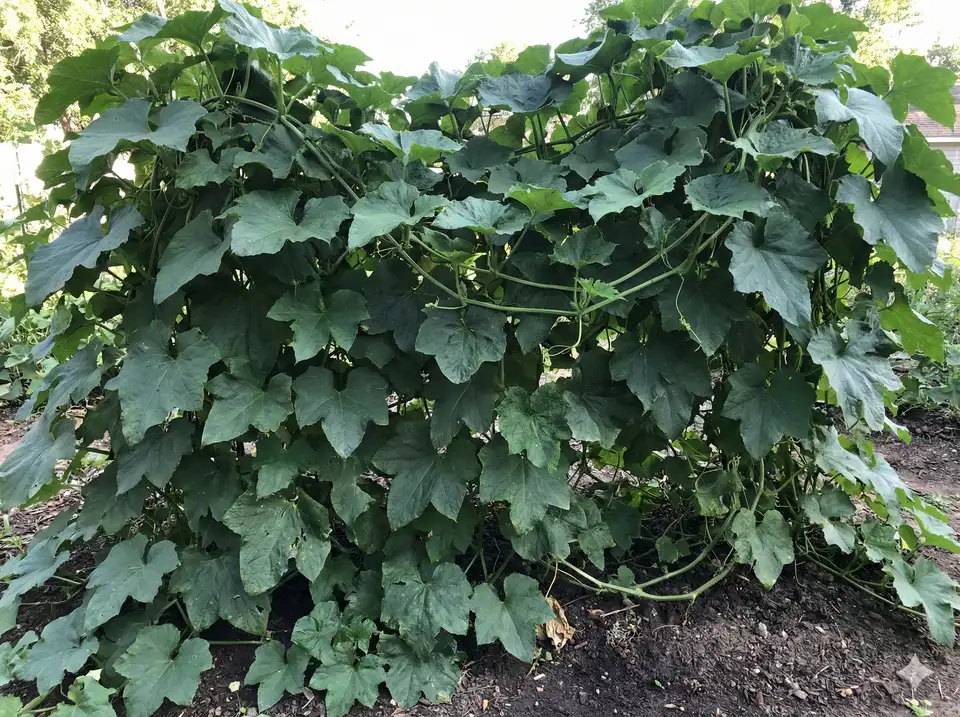
Signs this is your problem: Extremely lush, dark green foliage, vigorous vine growth but zero flowers, you've been using a high-nitrogen fertilizer (first number highest, like 10-5-5), planted in heavily composted or manured soil.
Nitrogen promotes leafy vegetative growth. When there's abundant nitrogen, the plant "decides" to keep growing leaves and vines rather than investing energy in reproduction (flowers and fruit).
- Stop all nitrogen-heavy fertilizers immediately
- Switch to a bloom-boosting fertilizer high in phosphorus (5-10-10 or 0-10-10)
- Water deeply to help flush excess nitrogen
- Wait 2-3 weeks for the plant to redirect energy to flowering
- Next season: reduce nitrogen after vines reach the trellis top
3. Insufficient Sunlight
Signs this is your problem: Plant receives less than 6 hours of direct sun, vines are "leggy" with long spaces between leaves, stems are thin and weak, plant is shaded by buildings, trees, or other plants.
Loofah is a tropical plant that needs abundant light energy to trigger flowering. With insufficient sunlight, the plant prioritizes basic survival over reproduction.
- Aim for 8+ hours of full sun daily (6 hours minimum)
- Prune nearby plants or trees that create shade
- If in containers, relocate to a sunnier spot
- Train vines to grow toward the sunniest area
- Consider reflective mulch to increase light exposure

4. Heat Stress (Above 95°F)
Signs this is your problem: Daytime temperatures regularly exceed 95°F (35°C), flowers appear but fall off before opening, leaves wilt in afternoon despite adequate water.
While loofah loves heat, extreme temperatures above 95°F cause the plant to abort flower buds as a survival mechanism. Pollen also becomes non-viable above these temperatures.
- Provide afternoon shade using shade cloth (30-40%)
- Increase watering frequency during heat waves
- Mulch heavily (3-4 inches) to cool roots
- Water in early morning to help cool the plant
- Be patient—flowering will resume when temps moderate

5. Water Stress (Too Much or Too Little)
Signs of underwatering: Leaves wilt in afternoon and recover overnight, leaves are crispy at edges, soil is dry several inches down, flower buds shrivel before opening.
Signs of overwatering: Leaves are yellow and droopy, soil stays soggy for days, root rot symptoms (brown, mushy roots), overall stunted growth.
- Water deeply when top 2 inches of soil are dry
- Established loofahs need 1-2 inches of water per week
- Use drip irrigation or soaker hoses for consistency
- Mulch to maintain even soil moisture
- Improve drainage if soil stays waterlogged
6. Root Problems (Root Bound or Damaged)
Signs this is your problem: Growing in a container less than 15 gallons, roots visible at drainage holes or soil surface, plant needs water every day despite moderate temperatures, growth has slowed or stopped.
- Use containers of at least 15-20 gallons for loofah
- If root bound, carefully transplant to larger container
- For in-ground plants, avoid disturbing roots
- Allow 2-3 weeks for recovery after transplanting
- Consider fabric grow bags for better root health
7. Short Day Length Issues
Signs this is your problem: You're growing in late season (after August in Northern Hemisphere), days are getting noticeably shorter, plant is healthy but simply won't initiate flowers.
Some loofah varieties are sensitive to day length. As days shorten in late summer/fall, the plant may not receive the signals needed to flower.
- Next year: start seeds earlier (February-March indoors)
- Supplemental lighting can extend "day length" artificially
- Choose day-neutral varieties if available
- In warm climates: fall-planted loofah may flower in spring
8. Phosphorus or Potassium Deficiency
Signs this is your problem: Purple or reddish discoloration on leaves (phosphorus), brown leaf edges especially on older leaves (potassium), overall weak spindly growth, haven't fertilized or using only nitrogen.
Phosphorus is essential for flower and fruit development. Potassium supports overall plant health and stress resistance. Without these, the plant can't produce flowers.
- Apply a balanced fertilizer or bloom booster
- Bone meal adds phosphorus naturally
- Wood ash or kelp meal add potassium
- Consider a soil test if problems persist
- Amend soil with compost before planting next season
Quick Diagnostic Checklist
Run through this checklist to quickly identify why your loofah isn't flowering:
- Is your plant at least 60-80 days old from seed? If not, it may simply need more time to mature.
- Are you using a high-nitrogen fertilizer? Check the first number (N-P-K ratio). High nitrogen = more leaves, fewer flowers.
- Does the plant receive at least 6-8 hours of direct sun? Track actual sunlight, not estimates. Loofah needs full sun.
- Are daytime temperatures consistently above 95°F? Extreme heat causes flower drop. Provide afternoon shade.
- Is your watering consistent? Both drought stress and overwatering inhibit flowering.
- If in a container, is it at least 15-20 gallons? Root-bound plants struggle to flower.
- Did you start seeds late in the season? Short days in late summer/fall can prevent flowering.
- Are leaves showing purple, red, or brown edges? These colors can indicate phosphorus or potassium deficiency.
Frequently Asked Questions
How long does it take for loofah to flower?
Loofah plants typically begin flowering 45-60 days after transplanting, or 60-80 days after germination. Male flowers appear first, followed by female flowers with small fruit behind them about 1-2 weeks later.
Why does my loofah have only male flowers?
It's completely normal for loofah plants to produce only male flowers at first. This is nature's way of ensuring pollen is available when female flowers open. Female flowers typically appear 1-2 weeks after the first male flowers. If you're only seeing male flowers for more than 3 weeks, the plant may be stressed by excess nitrogen, heat, or other factors discussed above.
Can too much fertilizer stop loofah from flowering?
Yes, specifically too much nitrogen fertilizer. Nitrogen promotes vegetative (leaf and vine) growth at the expense of reproductive growth (flowers and fruit). Switch to a low-nitrogen, high-phosphorus fertilizer (like 5-10-10) once vines are established to encourage blooming.
Will pruning my loofah encourage flowering?
Moderate pruning can help redirect energy toward flowering. Pinch off the growing tip once the vine reaches the top of your trellis. Remove excessive side shoots, keeping 2-3 strong branches. However, don't over-prune—loofah needs leaves for photosynthesis.
Is it too late if my loofah hasn't flowered by August?
It depends on your climate. In zones 8-11, you may still have time for a harvest if flowers appear by mid-August. In zones 7 and cooler, loofah needs 60+ more days after flowering to produce mature sponges, so late flowering may not yield usable loofahs before frost.