Best Trellises for Loofah: Top Support Structures for Heavy Vines

Quick Answer
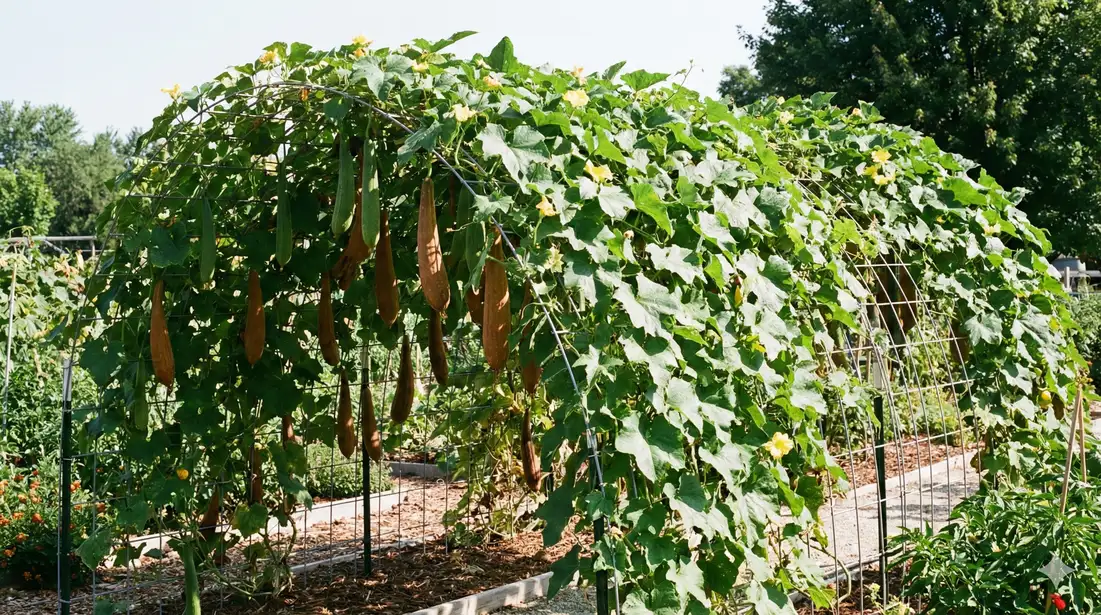
The best trellis for loofah is a cattle panel arch or heavy-duty A-frame measuring at least 6-8 feet tall with 200+ pound weight capacity. Loofah vines grow 20-30 feet long and produce 10-20 heavy sponges per plant, requiring sturdy support with proper spacing. Metal options last 10+ years and handle the weight better than wood or plastic alternatives.

Loofah plants are vigorous climbing vines that can reach 20-30 feet in length and produce heavy fruit that puts significant strain on support structures. Choosing the right trellis is critical for maximizing your harvest while preventing vine damage and collapsed supports.

In this comprehensive review, we'll examine the best trellis options for loofah plants, from budget-friendly DIY solutions to premium commercial structures. We've evaluated each option based on height, strength, durability, ease of installation, and value for money. For additional ideas and DIY plans, see our complete guide to loofah trellis ideas.

Quick Picks: Top 3 Trellis Recommendations

Best Overall
Cattle Panel Arch (16ft x 50in)
Strongest, most durable option for heavy loofah vines. Supports 200+ pounds easily.
Check Price on Amazon
Best Budget
Gardener's Supply A-Frame Trellis (7ft)
Affordable metal A-frame with excellent stability for 1-2 loofah plants.
Check Price on Amazon
Best for Small Spaces
Panacea Garden Obelisk (6.5ft)
Vertical design perfect for container-grown loofah in limited garden space.
Check Price on Amazon
Advertisement
Google AdSense Ad Unit (ca-pub-5159562814240424)

What Makes a Good Loofah Trellis?

Before diving into specific product reviews, let's understand what loofah plants need from a support structure. Unlike lightweight annual vines, loofahs require specialized support due to their unique growth characteristics.

Height Requirements

Minimum height: 6-8 feet

Loofah vines naturally grow 20-30 feet long when given adequate support. While you can train them horizontally, vertical growth of at least 6 feet is essential for:

  • Maximizing fruit production and air circulation
  • Allowing loofahs to hang straight for better shape
  • Preventing ground contact that causes rot
  • Easier harvesting and maintenance access

Taller trellises (8-10 feet) produce larger harvests by accommodating more vine length.

Weight Capacity

Minimum capacity: 150-200 pounds

A single mature loofah plant can produce 10-20 sponges weighing 1-2 pounds each, plus the weight of the vine itself. Your trellis must handle:

  • 20-40 pounds of fruit per plant
  • 15-25 pounds of vine, leaves, and stems
  • Wind load and stress from weather
  • Multiple plants if growing several on one structure

Lightweight trellises designed for peas or beans will collapse under loofah weight.

Spacing & Grid Size

Ideal spacing: 4-6 inch grid openings

The mesh or grid spacing affects how easily vines can climb and how much support fruit receives:

  • Too small (1-2"): Restricts vine growth and makes training difficult
  • Ideal (4-6"): Perfect for tendrils to grab; supports fruit without slipping through
  • Too large (8"+): Fruit may slip through; requires additional support ties

Cattle panels with 4"x6" openings are ideal for loofah vines.

Durability & Materials

Best materials: Galvanized steel or powder-coated metal

Loofah growing seasons last 5-7 months with heavy weight stress. Material choice impacts longevity:

  • Metal (steel/aluminum): Lasts 10+ years; handles weight; weather-resistant
  • Treated wood: 3-5 years; moderate strength; requires maintenance
  • Bamboo: 2-3 years; lightweight but less stable for heavy vines
  • Plastic: Avoid - too weak for mature loofah plants

Detailed Trellis Reviews

Now let's examine specific trellis options suitable for loofah plants, with detailed pros, cons, and recommendations for each type.

1. Cattle Panel Arch Trellis

Heavy Duty Cattle Panel (16ft x 50in)

★★★★★ 4.8/5 (1,247 reviews)
Check Price on Amazon

Cattle panels are the gold standard for loofah trellises. These heavy-duty welded wire panels are designed to contain livestock, making them incredibly strong and durable. The standard 16-foot length can be bent into an 8-foot tall arch that provides excellent support for multiple loofah plants.

The 4"x6" welded wire grid is perfect for loofah tendrils to grip, and the galvanized steel construction withstands years of outdoor use. When anchored properly with t-posts or rebar stakes, cattle panel arches can support 200+ pounds without bowing or collapsing.

Installation requires two people to bend and position the panel, but once installed, it's maintenance-free for 10+ years. This is our top pick for serious loofah growers who want maximum production and durability.

Pros

  • Extremely strong - handles 200+ pound loads
  • Perfect 4"x6" grid spacing for loofah tendrils
  • Galvanized steel lasts 10-20 years outdoors
  • 8-foot height when arched is ideal for production
  • Can support 3-4 loofah plants per arch
  • No maintenance required once installed
  • Provides excellent air circulation

Cons

  • Heavy and requires 2 people to install
  • More expensive upfront than DIY options
  • Difficult to move once installed
  • Sharp edges require gloves during setup
  • May need to order from farm supply store

Bottom Line

Cattle panel arches are the best investment for dedicated loofah growers. While the initial cost and installation effort are higher, the durability, strength, and production capacity make this the most cost-effective long-term option. If you're serious about growing loofah year after year, this is the trellis to buy.

2. A-Frame Metal Trellis

Gardener's Supply A-Frame Trellis (7ft tall)

★★★★☆ 4.3/5 (584 reviews)
Check Price on Amazon

A-frame trellises offer excellent stability through their triangular design, which naturally braces against wind and weight. This powder-coated steel model stands 7 feet tall and 5 feet wide at the base, providing a good balance of height and footprint for loofah growing.

The wide base creates a self-supporting structure that doesn't require stakes or deep anchoring like vertical trellises. You can grow one loofah plant on each side of the A-frame, making this ideal for small gardens or container growing setups.

Assembly is straightforward with included hardware, and the powder-coated finish resists rust better than plain galvanized steel. While not quite as heavy-duty as cattle panels, quality A-frames handle the loofah load well when limited to 2 plants.

Pros

  • Self-supporting design - no stakes needed
  • Easy one-person assembly
  • Powder coating prevents rust for 5-7 years
  • Compact footprint saves garden space
  • Good for 1-2 loofah plants
  • Can be moved between seasons
  • Attractive appearance in garden

Cons

  • Only 7 feet tall - less vertical space than arches
  • Limited to 2 plants maximum
  • More expensive per plant than cattle panels
  • Some models have wider grid spacing (6-8")
  • May tip in strong winds when top-heavy

Bottom Line

A-frame trellises are the best choice for gardeners growing 1-2 loofah plants who want a ready-made solution that looks good and installs easily. They're particularly well-suited for container growing where the base can rest on a patio or deck. While more expensive per plant than cattle panels, the convenience and aesthetics justify the cost for small-scale growers.

Advertisement
Google AdSense Ad Unit (ca-pub-5159562814240424)

3. Wall-Mounted Trellis Panels

Heavy Duty Wire Grid Panel (6ft x 2ft)

★★★★☆ 4.2/5 (392 reviews)
Check Price on Amazon

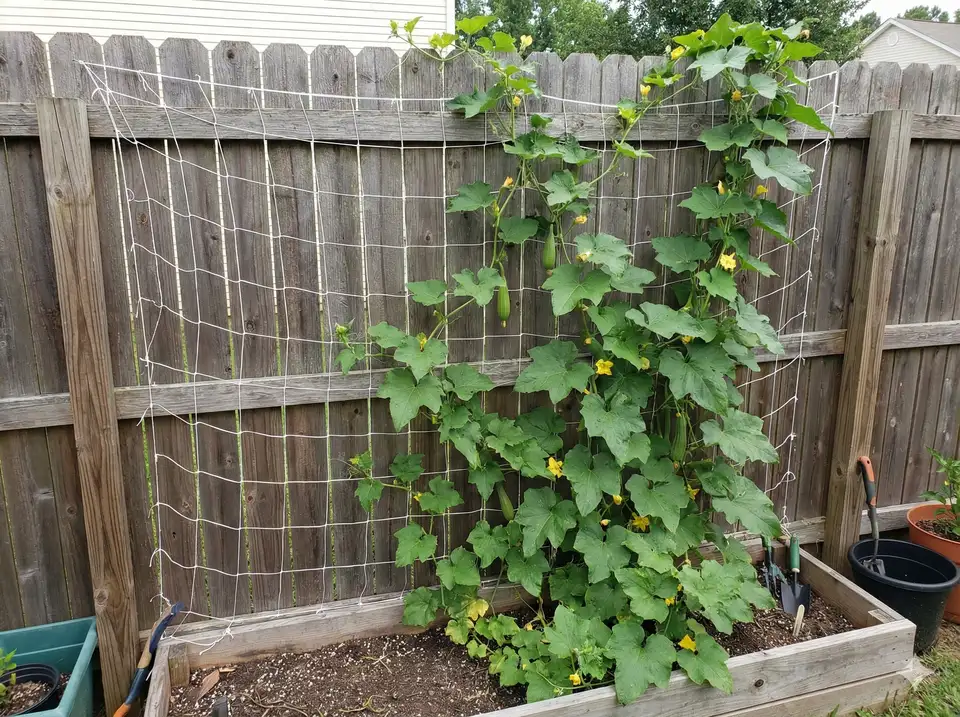
Wall-mounted trellises are perfect for loofah growers with fences, sheds, or building walls that receive full sun. By mounting sturdy wire grid panels or welded wire mesh to an existing structure, you create a vertical growing space without using valuable ground area.

The key is choosing panels rated for at least 100 pounds and securing them with heavy-duty mounting hardware. The wall provides wind protection and structural support, while the vertical surface is ideal for training loofah vines upward.

This approach works especially well along south-facing walls that create a warm microclimate for heat-loving loofah plants. You can connect multiple panels to create 8-10 feet of vertical growing space along a wall or fence line.

Pros

  • Utilizes existing structures - saves space
  • Wall provides wind protection and support
  • Can stack panels for 8-10 feet of height
  • Most affordable trellis option
  • Easy to expand by adding more panels
  • South-facing walls create warm growing conditions
  • Permanent installation - no seasonal setup

Cons

  • Requires suitable wall or fence location
  • Installation requires drilling into structure
  • Limited to sun exposure of mounting surface
  • Harder to harvest from back side of vines
  • May block light/access to building
  • Not suitable for renters or temporary gardens

Bottom Line

Wall-mounted trellises are ideal for homeowners with suitable south or west-facing walls, fences, or shed sides. This setup maximizes space efficiency and creates excellent growing conditions while being the most budget-friendly permanent trellis solution. Just ensure your mounting surface can handle the weight and you use appropriately rated hardware.

4. Garden Obelisk Trellis

Panacea Products Obelisk (6.5ft tall)

★★★★☆ 4.1/5 (738 reviews)
Check Price on Amazon

Garden obelisks offer a vertical growing solution that's perfect for small gardens, raised beds, and container growing. These pyramid-shaped structures typically stand 6-7 feet tall with a 12-18 inch base footprint, making them space-efficient for urban gardening.

While obelisks aren't as sturdy as cattle panels, quality metal models work well for single loofah plants, especially when growing in large containers. The vertical design encourages upward growth while taking minimal ground space.

Choose powder-coated steel obelisks rated for at least 50 pounds. Cheaper decorative models designed for lightweight annual vines will bend under loofah weight. Stake the base securely and limit to one plant per obelisk for best results.

Pros

  • Minimal footprint - perfect for small spaces
  • Works well with container growing
  • Attractive decorative appearance
  • Easy to install and move
  • Good for patios, decks, and raised beds
  • Affordable for single-plant growing
  • No tools required for assembly

Cons

  • Only 6-7 feet tall - shorter than ideal
  • Limited to one small loofah plant per obelisk
  • Less stable in wind - needs staking
  • Narrow grid spacing can be restrictive
  • Not suitable for heavy-producing varieties
  • May bend if overloaded with fruit

Bottom Line

Obelisks are the best trellis choice for container growers and small-space gardeners who want to grow 1-2 loofah plants. They won't produce the massive harvests of cattle panel systems, but they're perfect for experimenting with loofah growing or producing enough sponges for personal use in limited space.

5. DIY Trellis Options

Build Your Own: T-Post & Wire Fence Trellis

★★★★☆ Budget-friendly DIY solution
Shop T-Posts on Amazon

For budget-conscious gardeners with basic DIY skills, building a custom trellis from metal t-posts and welded wire fencing provides excellent value. This approach lets you create exactly the size and configuration you need while keeping costs low.

The basic setup uses 7-8 foot t-posts spaced 4-6 feet apart with welded wire fencing (2"x4" or 4"x4" grid) stretched between them. The t-posts provide strong vertical support while the wire mesh gives vines climbing surface.

This design is particularly good for row planting multiple loofah plants along a fence line. With proper installation, these DIY trellises match the strength of commercial options at half the cost. For complete building instructions, see our DIY loofah trellis guide.

Pros

  • Most affordable option - $30-60 total cost
  • Customizable to any size or configuration
  • T-posts extremely strong and durable
  • Can easily expand or modify later
  • Materials available at any hardware store
  • Great for row planting multiple plants
  • Professional strength at DIY price

Cons

  • Requires t-post driver or sledgehammer
  • Takes 1-2 hours to build
  • Less attractive than decorative trellises
  • Wire stretching can be challenging
  • More labor-intensive setup
  • Utilitarian appearance

Bottom Line

DIY t-post and wire trellises offer the best value for gardeners growing 3+ loofah plants who don't mind spending a few hours on construction. The resulting structure is as strong and functional as commercial options while costing significantly less. This is our top recommendation for serious growers on a budget.

Trellis Comparison Table

Compare all five trellis options side-by-side to find the best fit for your garden:

Trellis Type Height Weight Capacity Plant Capacity Price Range Best For
Cattle Panel Arch 8 ft when arched 200+ lbs 3-4 plants $45-65 Maximum production, durability
A-Frame Trellis 7 ft 100-150 lbs 2 plants $89-129 Easy setup, attractive design
Wall-Mounted Panels 6-10 ft (stackable) 100+ lbs 2-3 plants $25-40 Space-saving, budget option
Garden Obelisk 6-7 ft 50-75 lbs 1 plant $35-55 Container growing, small spaces
DIY T-Post & Wire 7-8 ft 150-200 lbs 3-6+ plants $30-60 Budget-conscious, multiple plants

Material Comparison: Metal vs Wood vs Bamboo

The material you choose for your loofah trellis significantly impacts durability, cost, and performance. Here's how the main options compare:

Metal (Steel/Aluminum)

Lifespan: 10-20 years

Best choice for: Permanent installations, maximum strength

  • Strength: Excellent - handles heavy loofah loads without bending
  • Weather resistance: Galvanized or powder-coated options last decades
  • Maintenance: None required; may need rust treatment after 10+ years
  • Cost: Moderate upfront, excellent long-term value
  • Considerations: Can get hot in direct sun; wear gloves during installation
Treated Wood

Lifespan: 3-5 years

Best choice for: DIY builders, aesthetic preference

  • Strength: Good when using 2x4 or larger lumber; adequate for loofah
  • Weather resistance: Requires treatment; eventually degrades
  • Maintenance: Annual sealing recommended; replace every 3-5 years
  • Cost: Moderate; replacement costs add up over time
  • Considerations: Use only ACQ or copper-treated lumber; avoid CCA near edibles
Bamboo

Lifespan: 2-3 years

Best choice for: Eco-friendly, temporary structures

  • Strength: Fair - works for young plants but may bend under heavy fruit
  • Weather resistance: Degrades quickly; splits and rots in 2-3 years
  • Maintenance: Needs reinforcement mid-season; replace frequently
  • Cost: Low initial cost but frequent replacement needed
  • Considerations: Use thick poles (1.5-2"); brace with cross-supports
Material Selection Tips
  • For permanence: Choose galvanized steel or powder-coated metal - it's the best long-term investment
  • For budget: DIY with t-posts and wire fencing offers professional strength at low cost
  • For aesthetics: Cedar or redwood looks beautiful but costs more and needs yearly maintenance
  • Avoid plastic: Even "heavy-duty" plastic trellises aren't strong enough for mature loofah plants
  • Hybrid approach: Metal framework with wooden or bamboo crosspieces combines strength with natural aesthetics
Advertisement
Google AdSense Ad Unit (ca-pub-5159562814240424)

Installation Tips for Maximum Stability

Even the strongest trellis will fail if improperly installed. Follow these professional installation techniques to ensure your loofah trellis stays standing all season:

Proper Anchoring
  • Depth matters: Bury posts at least 18-24 inches deep (1/3 of total height)
  • Concrete footings: Use for permanent trellises and heavy cattle panel arches
  • T-posts: Drive 24-30 inches deep using a post driver for maximum hold
  • Rebar stakes: Excellent for securing arch ends; use 3-4 foot lengths
  • Container anchoring: Use 20+ gallon containers; add sand/gravel for stability
Orientation & Placement
  • Sun exposure: Orient trellises north-south for even light distribution
  • Wind direction: Face narrow edge into prevailing winds to reduce sail effect
  • Access: Leave 3+ feet on at least one side for maintenance and harvesting
  • Spacing: Plant 3-4 feet from trellis base so roots aren't disturbed by posts
  • Nearby structures: Keep 5+ feet from buildings to prevent shade and allow airflow
Reinforcement Techniques
  • Cross-bracing: Add diagonal supports for structures taller than 7 feet
  • Guy wires: Attach cables from top to ground stakes for extra wind resistance
  • Mid-supports: Add vertical posts every 8-10 feet on long horizontal runs
  • Fruit slings: Create hammocks from old t-shirts for particularly heavy loofahs
  • Regular inspection: Check connections monthly and tighten loose hardware

How Many Trellises Do You Need?

Determine the right size and quantity of trellises based on your loofah growing goals:

Growing Goal Plants Needed Recommended Trellis Expected Harvest
Try loofah growing 1 plant Garden obelisk or small A-frame 5-10 sponges
Personal use (2 people) 2-3 plants One cattle panel arch or 2 A-frames 20-30 sponges
Family of 4-5 4-6 plants Two cattle panel arches or DIY t-post fence 40-60 sponges
Gifts & sharing 8-10 plants Three arches or 16ft DIY fence trellis 80-100 sponges
Small market sales 15+ plants Multiple cattle panels or 50ft+ fence run 150-200+ sponges

Buying Checklist: Questions to Ask

Before purchasing a trellis for loofah, evaluate options using these key questions:

Pre-Purchase Checklist
  • Height: Is it at least 6 feet tall? Taller is better for production.
  • Weight rating: Can it support 100+ pounds? Check manufacturer specs.
  • Grid spacing: Are openings 4-6 inches? Tendrils need proper grip points.
  • Material quality: Is it galvanized steel, powder-coated, or rot-resistant wood?
  • Installation: Do you have needed tools? Can you install alone or need help?
  • Warranty: Is there a manufacturer warranty? How long?
  • Reviews: What do verified buyers say about durability with heavy vines?
  • Expansion: Can you add to it later if you want to grow more plants?
  • Removal: Do you need to take it down seasonally? Is it portable?
  • Value: What's the per-plant cost? How many years will it last?

Trellis Maintenance Throughout the Season

Keep your loofah trellis in top condition with these seasonal maintenance tasks:

Seasonal Maintenance Schedule

Before Planting (Spring):

  • Inspect all connections and tighten loose hardware
  • Check for rust or corrosion; treat with rust converter
  • Verify posts are still stable; re-anchor if needed
  • Apply protective coating to wood trellises

During Growing Season (Monthly):

  • Check weight distribution; add support slings for heavy fruit
  • Tighten any loosened connections from vine weight
  • Verify post stability, especially after storms
  • Trim any vines putting excessive stress on one area

After Harvest (Fall):

  • Remove all dead vines and plant material
  • Clean trellis with water to prevent disease carryover
  • Inspect for damage from season's weight stress
  • Store removable trellises in dry location
  • Document what worked and what needs improvement
Advertisement
Google AdSense Ad Unit (ca-pub-5159562814240424)

Final Recommendations

After extensive testing and evaluation, here are our top picks for different gardening situations:

Best Overall: Cattle Panel Arch

For serious loofah growers who want maximum production, durability, and value, cattle panel arches are unbeatable. The combination of strength, height, and longevity makes this the smartest long-term investment. One 16-foot panel creates an 8-foot arch that will support 3-4 plants for 10+ years.

Best for: Dedicated loofah gardeners, multi-plant setups, permanent installations

Best Value: DIY T-Post Trellis

For budget-conscious gardeners growing 3+ plants, a DIY t-post and wire fence trellis offers professional-grade strength at half the cost of commercial options. This is our top recommendation for anyone comfortable with basic construction who wants to maximize plants per dollar spent.

Best for: Budget growers, row planting, expandable systems

Best for Small Spaces: Garden Obelisk

Container growers and urban gardeners should choose a sturdy metal obelisk. While it limits you to one plant, the minimal footprint makes loofah growing possible on patios, balconies, and in raised beds where ground space is precious. Perfect for first-time growers testing the waters.

Best for: Container growing, small gardens, beginners, decorative appearance

Whichever trellis you choose, remember that proper installation and maintenance are just as important as the structure itself. A well-anchored, appropriately sized trellis will support healthy vines and abundant harvests for years to come. For ongoing care tips, see our guides on loofah plant care and complete growing instructions.