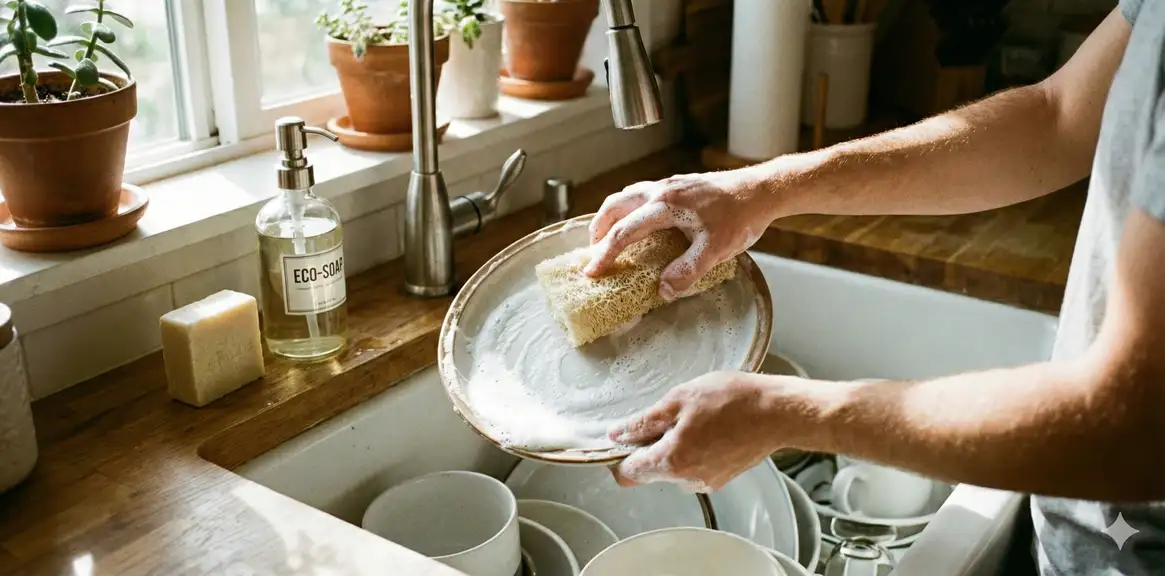
If you're looking to reduce plastic waste in your kitchen, replacing plastic kitchen sponges with natural loofah scrubbers is one of the easiest changes you can make. Loofah (also spelled luffa) is a plant-based, biodegradable material that works remarkably well for washing dishes, pots, and pans.
Unlike plastic sponges that can take hundreds of years to decompose and shed microplastics into waterways, loofah is completely natural and compostable. Each year, Americans throw away billions of plastic sponges that end up in landfills. By making the simple switch to loofah, you can embrace zero-waste throughout your home while getting dishes just as clean—if not cleaner.
This guide covers everything you need to know about using loofah for dishes, from preparation and cutting loofah to the right size to maintenance and cost savings. Whether you grow your own loofah or buy them online, you'll learn how to make the most of this sustainable kitchen essential.
Why Switch from Plastic Sponges to Loofah
Before diving into the how-to, let's look at why loofah is superior to conventional kitchen sponges. Understanding the benefits will help you appreciate why this switch is worth making.
- 100% biodegradable: Loofah decomposes completely within weeks when composted
- No microplastics: Won't shed tiny plastic particles into waterways like synthetic sponges
- Renewable resource: Can be grown in home gardens annually
- Zero-waste packaging: Often sold without plastic packaging
- Lower carbon footprint: Plant-based with minimal processing required
- Excellent scrubbing power: Fibrous texture removes stuck-on food effectively
- Natural antibacterial properties: Less prone to bacterial growth than plastic sponges
- Quick-drying: Open fiber structure allows air circulation to prevent odors
- Long-lasting: Durable fibers maintain structure for weeks of use
- Non-scratching: Safe for most surfaces (except non-stick)
Learn more about the environmental impact in our comprehensive guide: Loofah vs Plastic Sponge: Which is Better?
How to Prepare Loofah for Kitchen Use
Whether you've grown your own loofah or purchased one online, proper preparation is essential for using it as a dish scrubber. Here's the step-by-step process:
If you're starting with a whole dried loofah (common for home-grown or bulk purchases):
- Soak in warm water: Submerge the loofah for 15-20 minutes to soften
- Remove any remaining seeds: Shake out black seeds if present (save for planting!)
- Rinse thoroughly: Run under warm water to remove any plant debris
- Optional sanitizing: Boil for 5 minutes or soak in a 1:10 bleach solution, then rinse
Loofah starts out dry and stiff but softens quickly with water:
- Hot water soak: Place loofah piece in hot water for 1-2 minutes
- Squeeze excess water: Wring out so it's damp but not dripping
- Add dish soap: Apply your preferred dish soap directly to the loofah
- Ready to use: It should feel flexible and slightly springy
Cutting Loofah to the Right Size
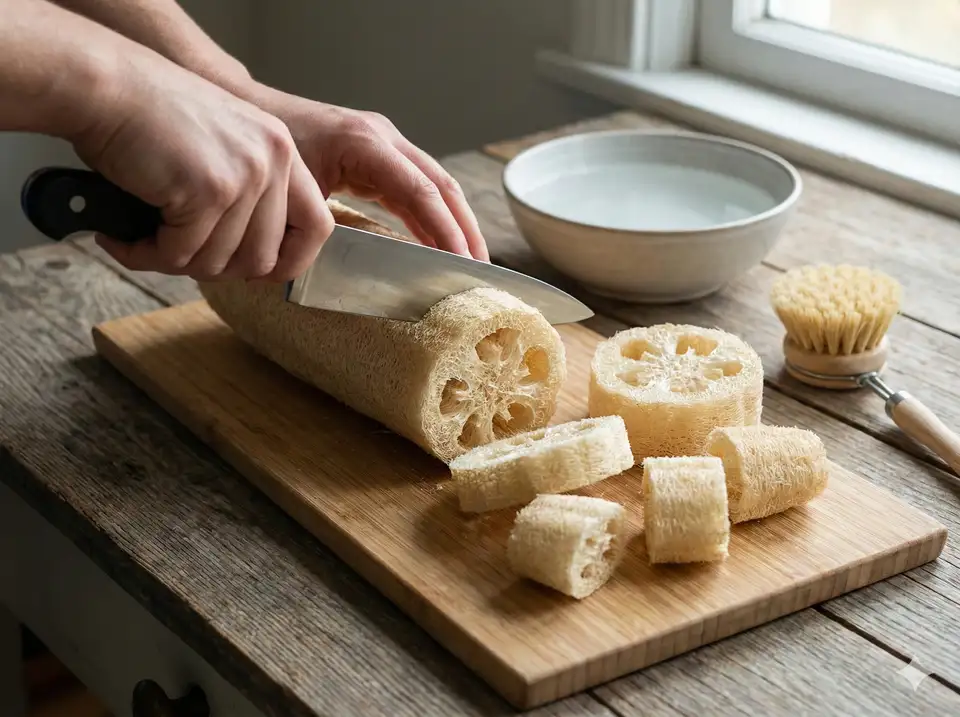
One whole loofah can be cut into multiple dish scrubbers, making it very economical. The key to sizing loofah for dishwashing is matching piece size to your hand and the task. The right size depends on your preference and hand size.
Recommended sizes:
- Standard dish scrubber: 2-3 inches wide (about palm-sized)
- Small scrubber for cups/glasses: 1-1.5 inches wide
- Large scrubber for pots/pans: 3-4 inches wide
Cutting tips:
- Use a serrated bread knife for easiest cutting
- Cut while dry for cleaner edges (wet loofah is harder to cut)
- A typical 10-12 inch loofah yields 6-8 dish scrubbers
- Cut straight across for circular pieces, or slice lengthwise for flat pads
- Trim any rough edges with scissors after cutting
What Dishes Loofah Works Best For
Loofah is versatile but works better on some surfaces than others. Knowing where to use it will help you get the best results.
| Surface Type | Loofah Safe? | Notes |
|---|---|---|
| Ceramic & Porcelain Dishes | Excellent | Perfect - won't scratch, removes food easily |
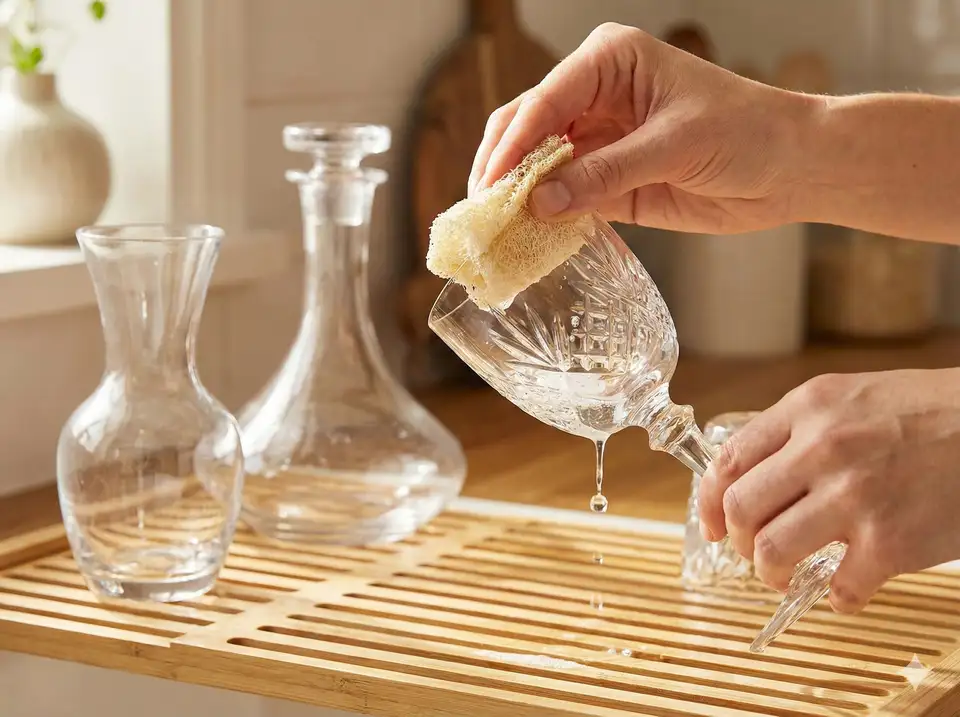
| Glass & Glassware | Excellent | Safe for drinking glasses, bakeware, windows |
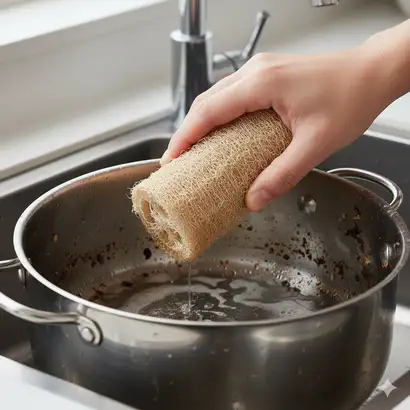
| Stainless Steel | Excellent | Great for pots, pans, sinks, and utensils |
| Cast Iron (seasoned) | Good | Won't damage seasoning; use minimal soap |
| Plastic Containers | Excellent | Won't scratch like abrasive scrubbers |
| Non-Stick Cookware | Avoid | Too abrasive; use soft cloth or sponge instead |
| Copper & Brass | Caution | May scratch decorative finishes; test first |
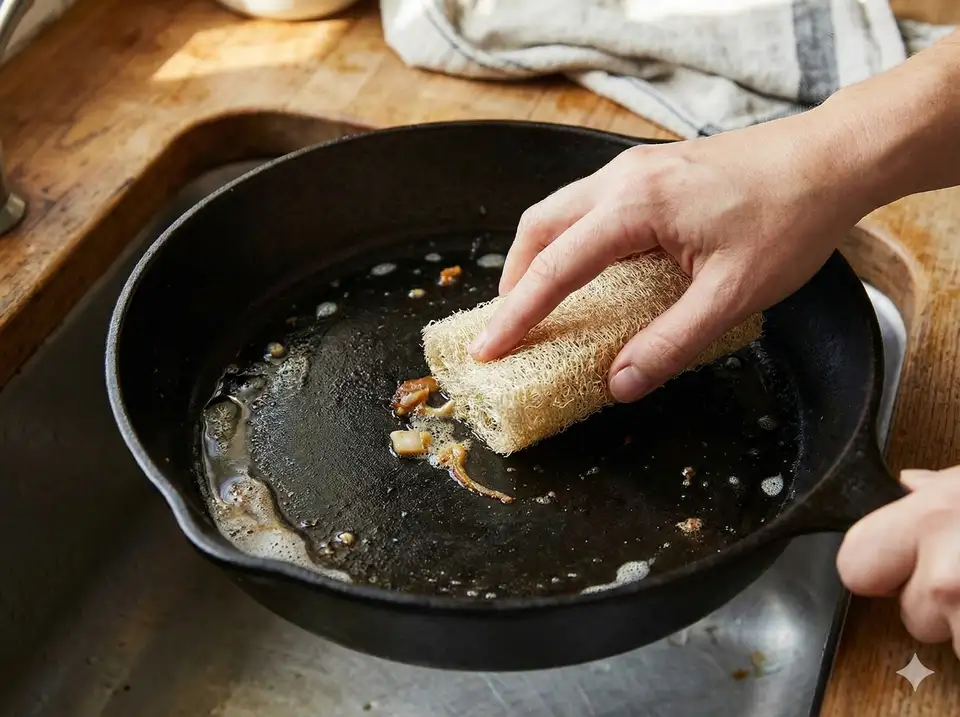
- Stuck-on food: Soak dishes in hot soapy water first, then scrub with loofah in circular motions
- Delicate items: Use a gentler touch on wine glasses and fine china
- Greasy pans: Loofah works great with hot water and degreasing dish soap
- Burnt-on food: For very stubborn residue, use a steel wool pad first, then finish with loofah
Limitations & What Not to Use Loofah For
While loofah is versatile, it's not ideal for every kitchen task. Here are the main limitations to be aware of:
- Non-stick pans (Teflon, ceramic coating): The abrasive texture can scratch and damage the coating, reducing non-stick properties
- Polished or lacquered surfaces: Can dull the finish on decorative metalware
- Sharp knives: The fibers can catch on blade edges; use a knife-safe sponge instead
- Very delicate crystal: While generally safe for glass, use extra caution on heirloom crystal
- Requires softening: Unlike foam sponges that are ready immediately, loofah needs a quick soak
- Less sudsy: Doesn't hold as much soap foam as synthetic sponges (but still cleans effectively)
- Texture takes adjustment: Feels different than plastic sponges; give it a week to adapt
- Not ideal for spills: Doesn't absorb liquid well; use a dishcloth for wiping up spills
Cleaning and Sanitizing Kitchen Loofah
Like any dish sponge, loofah needs regular cleaning to prevent bacterial growth and odors. The good news is that loofah is easier to sanitize than plastic sponges due to its natural antibacterial properties and open fiber structure. Learn effective methods for sanitizing your kitchen loofah to keep it fresh and hygienic.
- Rinse thoroughly: Run under hot water to remove all food particles and soap
- Squeeze out excess water: Wring it out well to speed drying
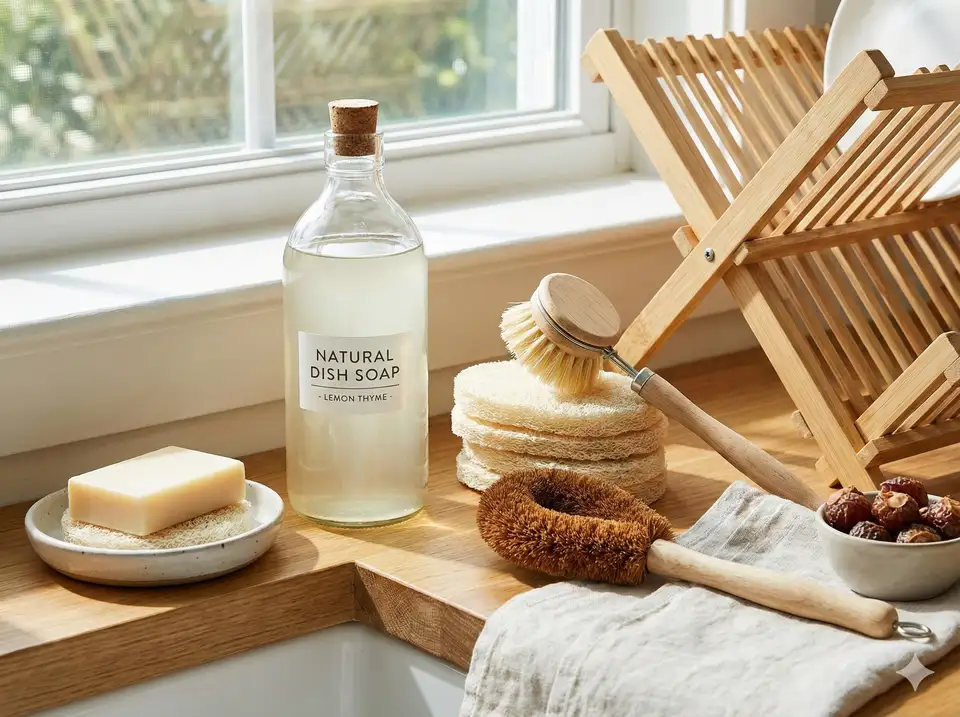
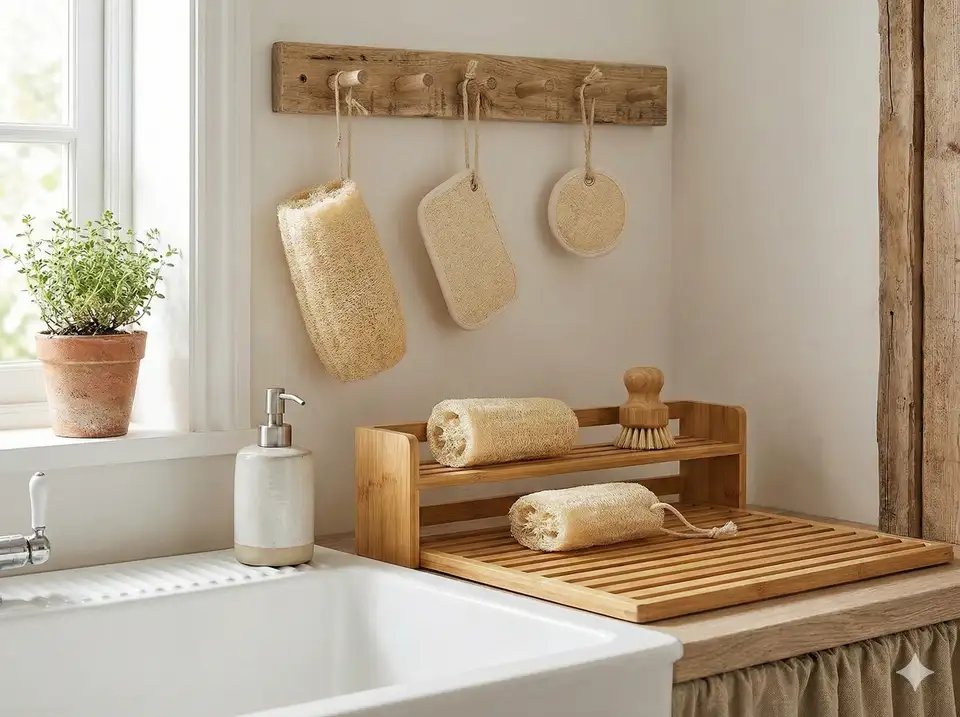
- Hang to dry: Place in a well-ventilated spot (near window or over sink edge)
- Don't leave in standing water: Always allow to air dry between uses
Choose one of these sanitizing methods once per week:
- Boiling method: Boil in water for 5 minutes, then air dry completely
- Microwave method: Soak in water, microwave on high for 2 minutes (let cool before handling)
- Dishwasher method: Run through a complete dishwasher cycle on top rack
- Vinegar soak: Soak in white vinegar for 5 minutes, then rinse and dry
- Always dry completely: The #1 cause of smelly sponges is staying wet; ensure full drying between uses
- Use separate scrubbers: Keep one for dishes and another for surfaces/counters
- Replace regularly: Even with proper care, replace every 2-4 weeks (or when it shows wear)
- Store properly: Use a sponge holder with drainage or hang on a hook—avoid closed containers
How Long Kitchen Loofah Lasts
The lifespan of a loofah dish scrubber depends on usage frequency and care, but here's what you can typically expect:
- Light use (1-2 loads/day): 4-6 weeks
- Moderate use (3-4 loads/day): 3-4 weeks
- Heavy use (5+ loads/day): 2-3 weeks
Signs it's time to replace:
- Fibers become very soft and lose scrubbing ability
- Develops a persistent odor even after sanitizing
- Starts to fall apart or shred excessively
- Becomes discolored or stained beyond cleaning
- Feels slimy even when dry
Composting When Done
One of the best features of loofah is that when it's worn out, you can simply compost when worn out instead of adding to landfill waste. This closes the loop and makes it a truly zero-waste kitchen product.
- Rinse thoroughly: Remove any remaining food particles
- Cut into smaller pieces: Breaking it up speeds decomposition (optional but recommended)
- Add to compost bin: Place in your home compost or municipal green waste bin
- Bury in garden: Alternatively, bury directly in garden beds where it will decompose and add organic matter
- Decomposition time: Fully breaks down in 2-4 weeks in active compost
Learn more in our detailed guide: How to Compost Loofah Sponges
Cost Comparison vs Buying Sponges
Let's look at the numbers to see how much money you can save by switching to loofah for dishwashing.
| Product | Cost per Unit | Lifespan | Annual Cost |
|---|---|---|---|
| Plastic Kitchen Sponge | $0.50-$1.00 | 2-3 weeks | $13-$26 |
| Premium Cellulose Sponge | $1.50-$2.50 | 3-4 weeks | $20-$33 |
| Pre-Cut Loofah Disc | $0.50-$1.00 | 3-4 weeks | $7-$13 |
| Whole Loofah (DIY cut) | $0.30-$0.60/piece | 3-4 weeks | $4-$8 |
| Home-Grown Loofah | $0.10-$0.20/piece | 3-4 weeks | $1-$3 |
- Buy in bulk: Purchase whole loofahs and cut them yourself—saves 40-60% compared to pre-cut
- Grow your own: Grow unlimited kitchen sponges from a single plant that produces 10-20 loofahs worth $30-60 in retail value
- Maximize lifespan: Proper daily rinsing and weekly sanitizing can extend life by 1-2 weeks
- Multi-purpose use: Use worn dish loofahs for scrubbing sinks, counters, or outdoor cleaning before composting
Tips for Best Results
Here are pro tips from experienced loofah users to help you get the best performance from your natural dish scrubbers. For product recommendations, see our top picks for dishes.
- Give it a week: It feels different from plastic sponges; most people adjust within 5-7 days
- Start with easy dishes: Begin with glasses and plates before tackling greasy pots
- Use hot water: Warm to hot water softens loofah faster and helps cut grease
- Keep a backup: Have 2-3 cut pieces ready so you always have a dry one available
- Color-code for different tasks: If you grow your own, some varieties are different colors—use for different purposes
- Combine with other tools: Use loofah for scrubbing, then a dish brush for hard-to-reach areas
- Make a soap pocket: Cut a small slit and insert a bar soap sliver for sudsy scrubbing
- Rotate multiple scrubbers: Use 2-3 on rotation so each has time to fully dry between uses
- Trim as needed: If edges fray, simply trim with scissors to maintain a clean edge

Recommended Products
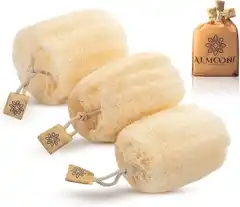
Almooni Egyptian Loofah Bath Sponges (3-Pack)
Premium thick-fiber natural loofahs - gentle exfoliation for all skin types - lasts 3-4 weeks each
Buy on Amazon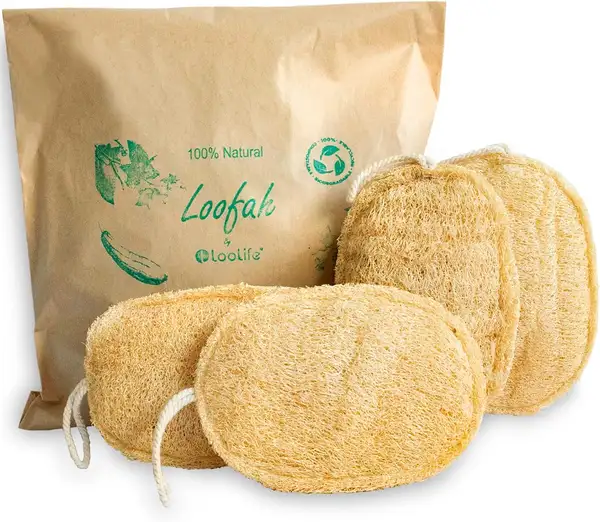
Natural Loofah Exfoliating Sponges (4-Pack)
100% organic biodegradable bath sponges - plastic-free alternative that's gentle on skin and planet
Buy on AmazonAs an Amazon Associate, we earn from qualifying purchases.