Every time you wash dishes or shower, your choice of scrubber affects the planet. With growing awareness of plastic pollution, understanding the true environmental cost of everyday products has never been more important. The humble sponge might seem insignificant, but when billions are used and discarded annually, the cumulative impact is staggering.
Americans alone discard approximately 400 million sponges every year, and the vast majority are synthetic products made from petroleum-based materials. These sponges don't biodegrade — they simply break into smaller and smaller pieces of plastic that persist in the environment for centuries. Meanwhile, they continuously shed microplastics during every use, contributing to a global pollution crisis that scientists are only beginning to understand.
This comprehensive comparison examines the environmental impact of natural vs synthetic materials across their entire lifecycle — from raw material extraction through manufacturing, use, and disposal. The differences are stark and should inform every conscious consumer's choices. By understanding the full picture, you can make a simple switch that significantly reduces your environmental footprint.
Impact Overview
The environmental differences between natural loofah and synthetic sponges are dramatic. While both serve the same purpose, their ecological footprints couldn't be more different. Here are the key statistics that illustrate the scale of the problem.
| Metric | Natural Loofah | Synthetic Sponge |
|---|---|---|
| Decomposition Time | 4-8 weeks | 500+ years |
| Microplastics Released | Zero | Thousands per use |
| Carbon Footprint | Carbon negative* | High (fossil fuels) |
*When homegrown, loofah plants absorb more CO2 during their growth than is released throughout the product's lifecycle.
These statistics become even more striking when you consider the scale of sponge usage worldwide. If just 10% of households switched from synthetic to natural loofahs, we could prevent millions of pounds of plastic from entering landfills and oceans each year. The switch requires no sacrifice in cleaning power — in fact, many users report that loofahs work better than their synthetic counterparts for both body care and kitchen cleaning.
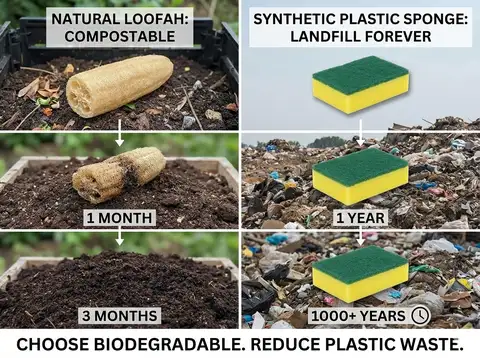
The decomposition difference alone is profound. While a loofah you compost today will be completely broken down and returned to the soil within two months, a synthetic sponge you throw away today will still exist when your great-great-great-grandchildren are born. Every synthetic sponge ever made still exists somewhere on our planet.
Make the Switch Today

Almooni Egyptian Loofah Bath Sponges (3-Pack)
Premium thick-fiber natural loofahs - gentle exfoliation for all skin types - lasts 3-4 weeks each
Buy on Amazon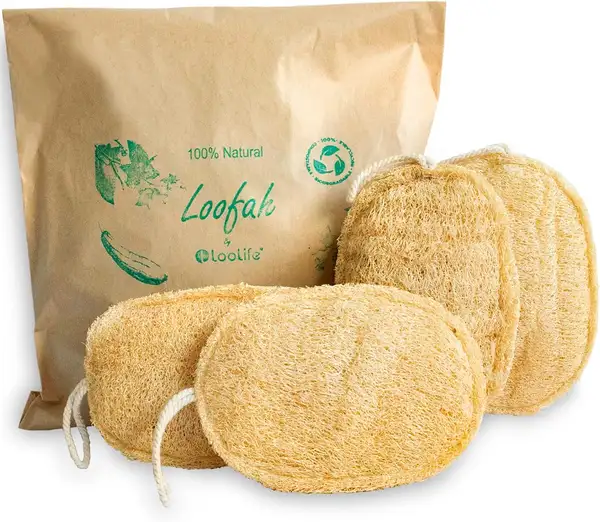
Natural Loofah Exfoliating Sponges (4-Pack)
100% organic biodegradable bath sponges - plastic-free alternative that's gentle on skin and planet
Buy on AmazonAs an Amazon Associate, we earn from qualifying purchases.
Full Lifecycle Comparison
To truly understand the environmental impact, we need to examine every stage of a product's life — from the extraction of raw materials through manufacturing, transportation, use, and eventual disposal. This lifecycle analysis reveals the true cost of our choices.
| Lifecycle Stage | Natural Loofah | Synthetic Sponge |
|---|---|---|
| Raw Materials | Plant fiber (renewable) | Petroleum (non-renewable) |
| Manufacturing | Minimal processing | Energy-intensive chemicals |
| Packaging | Often minimal/paper | Usually plastic |
| During Use | No harmful shedding | Releases microplastics |
| Lifespan | 3-4 weeks | 2-4 weeks |
| End of Life | Compostable | Landfill (500+ years) |
| Carbon Footprint | Carbon negative if homegrown | Positive (fossil fuels) |
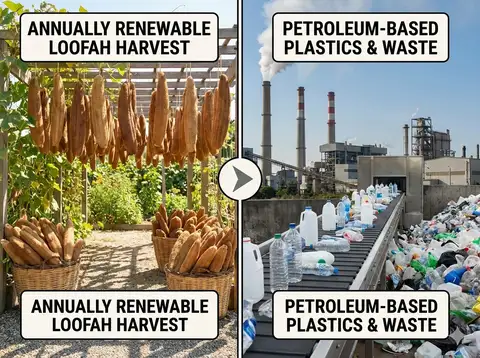
Looking at this table, you can see that natural loofah wins at every single stage of the product lifecycle. The raw material difference is fundamental — loofah is a renewable plant that grows back every season, while petroleum is a finite resource that required millions of years to form and releases stored carbon when extracted and processed.
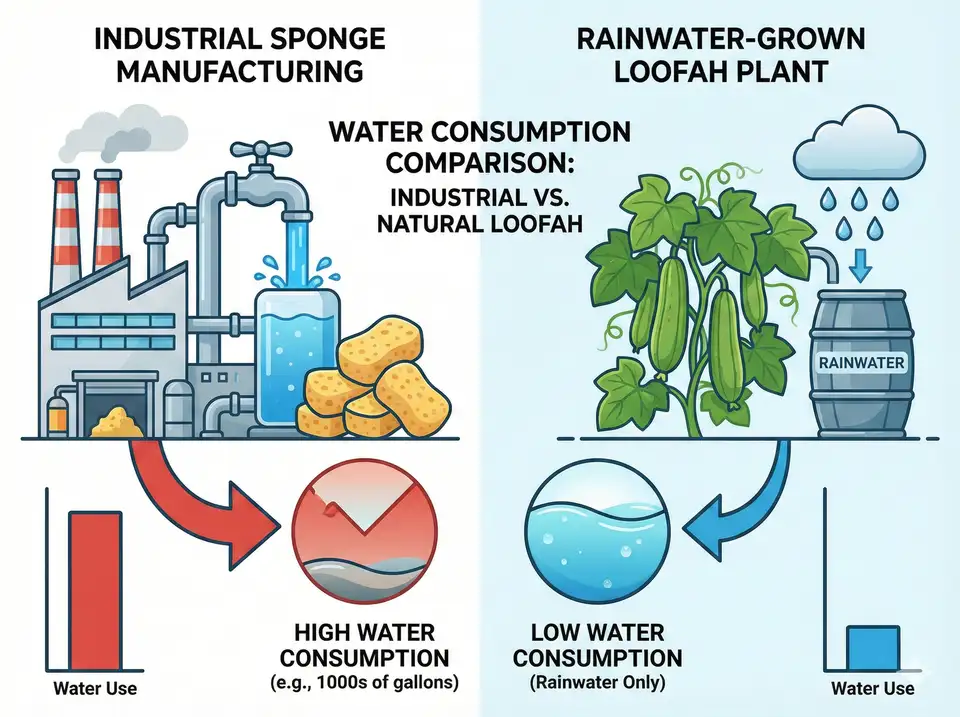
The manufacturing contrast is equally stark. Processing a loofah involves harvesting the mature gourd, peeling off the outer skin, removing seeds, and drying the fibrous interior. This can be done by hand with no electricity or chemicals. Synthetic sponge manufacturing, by contrast, involves multiple chemical processes at high temperatures, often using substances that are themselves environmental pollutants.
Perhaps most importantly, the "during use" phase reveals a hidden cost of synthetic sponges that most consumers never consider. Every time you scrub with a synthetic sponge, you're releasing invisible plastic particles into your home and water supply — a problem we'll explore in depth in the next section.
The Microplastics Problem
Microplastics are perhaps the most insidious environmental threat from synthetic sponges. These tiny plastic particles are invisible to the naked eye but cause massive ecological damage. Understanding this issue is crucial for making informed choices about eliminating plastic waste from your daily routine.
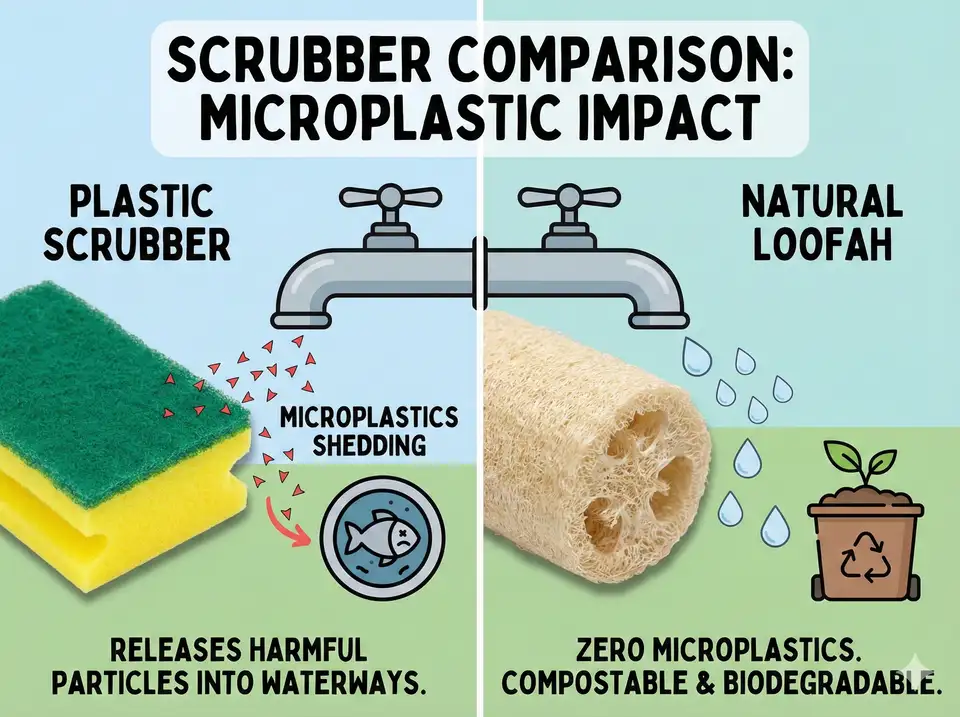
Every time you use a synthetic sponge, tiny plastic particles break off and wash down the drain. These microplastics:
- Enter waterways and oceans through wastewater
- Are consumed by marine life throughout the food chain
- Enter human food supply through seafood
- Never fully break down — only fragment smaller
- Have been found in drinking water worldwide
Natural loofah produces zero microplastics. When fibers break off, they're simply plant material that biodegrades completely within weeks. This fundamental difference is why environmental scientists increasingly recommend switching to natural alternatives for cleaning products.
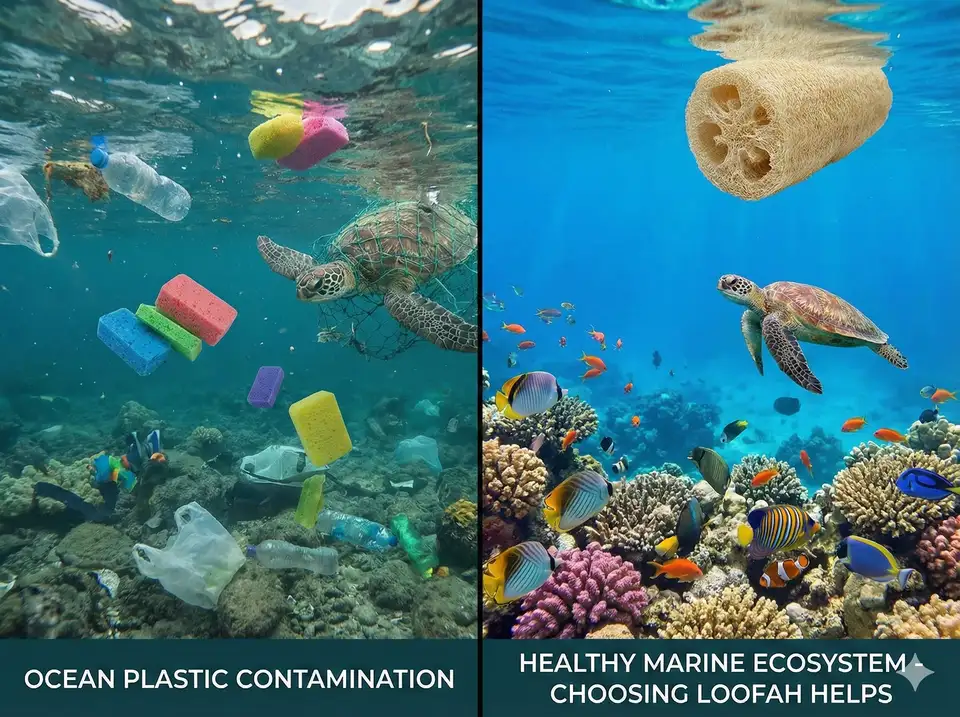
The scale of microplastic pollution from synthetic sponges is difficult to comprehend. Research suggests that a single synthetic sponge can release thousands of plastic particles with each use. Over its lifetime, one sponge may shed millions of microplastics — and these particles don't disappear. They accumulate in sediments, are ingested by aquatic organisms, and work their way up the food chain. Studies have found microplastics in the bodies of fish, shellfish, and even in human blood samples.
Wastewater treatment plants are not designed to filter out particles this small. While they capture larger debris, microplastics pass right through and into rivers, lakes, and oceans. Once there, they absorb toxic chemicals from the water, becoming even more harmful to organisms that mistake them for food. This is not a distant future problem — it's happening right now, with every dish you wash using a synthetic sponge.
Carbon Footprint Analysis
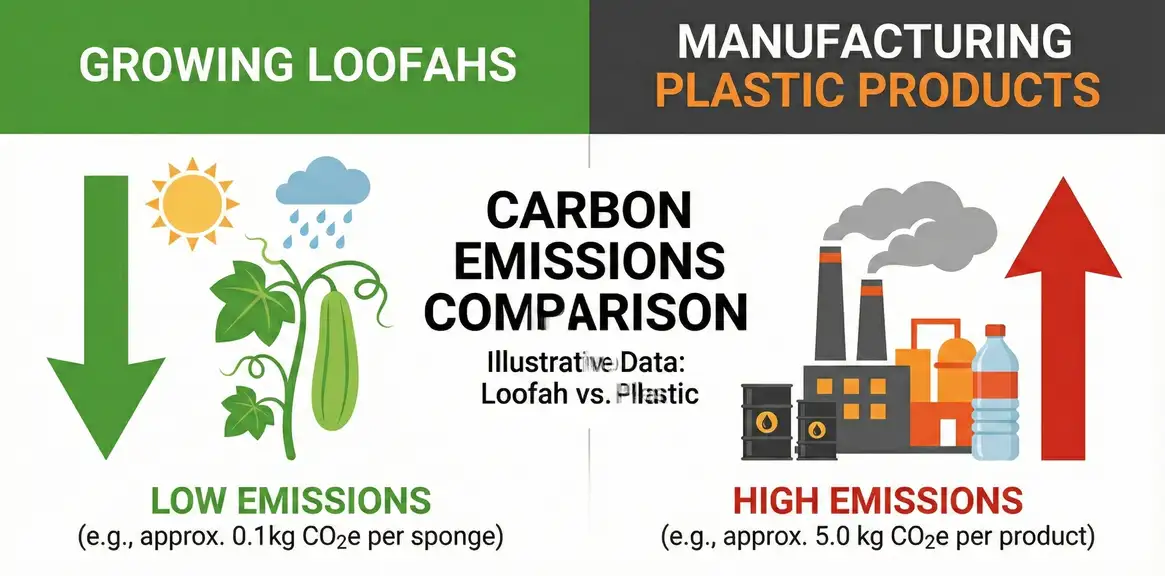
The carbon footprint of a product encompasses all greenhouse gas emissions throughout its lifecycle. When comparing loofah to synthetic sponges, the differences are substantial and favor natural alternatives at every stage. Understanding the carbon footprint of sourcing helps you make the most environmentally responsible choices.
Synthetic Sponge Carbon Costs
Synthetic sponges carry a significant carbon burden that starts before they're even manufactured and continues long after disposal.
- Petroleum extraction: Energy-intensive drilling and refining of crude oil
- Chemical manufacturing: High-temperature industrial processes
- Transportation: Often manufactured overseas and shipped globally
- Packaging production: Additional plastic for packaging
- Landfill emissions: Methane release during decomposition attempts
Natural Loofah Carbon Benefits
Loofah offers the opposite — a product that can actually help fight climate change when grown at home using organic cultivation benefits.
- Carbon sequestration: Plants absorb CO2 while growing
- Minimal processing: Only harvesting, drying, and cleaning needed
- Local production: Can be grown locally or in your backyard
- Sustainable packaging: Paper or minimal packaging typical
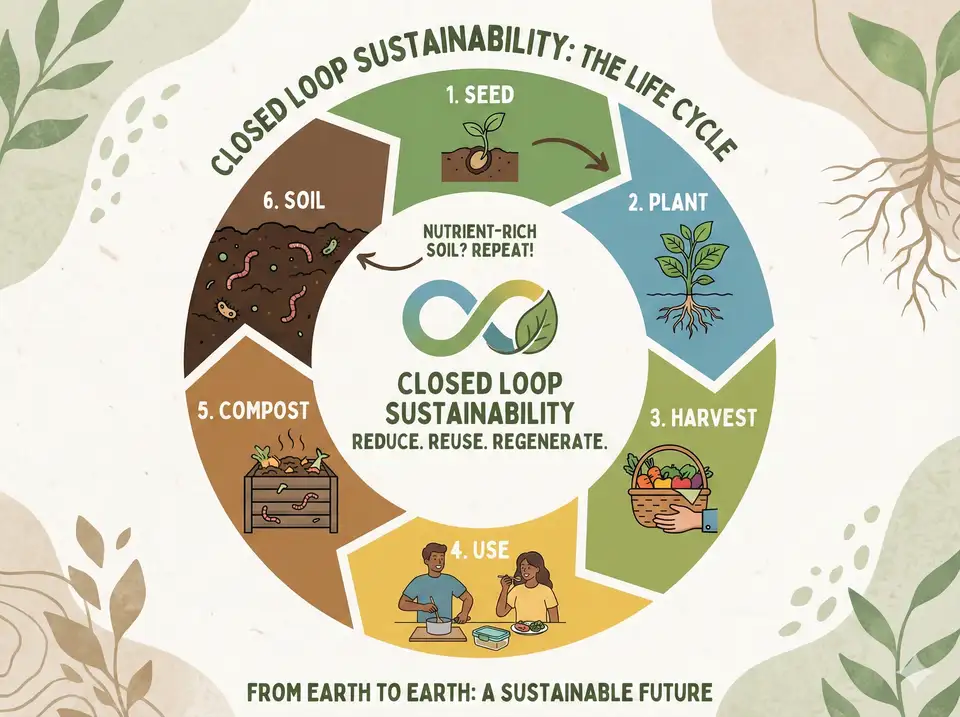
- Composting benefits: Returns nutrients to soil, supports future growth
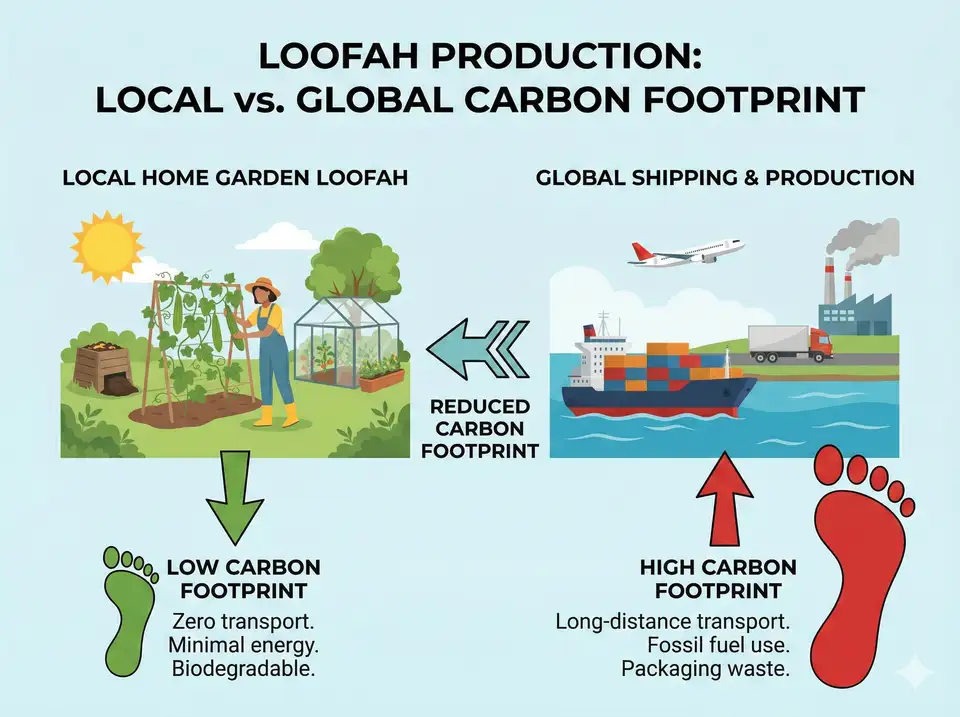
The contrast becomes even clearer when you consider the entire supply chain. A synthetic sponge might travel thousands of miles from a factory in Asia to your local store, burning fossil fuels at every stage. A homegrown loofah travels from your backyard to your kitchen — a distance of perhaps 50 feet. Even store-bought natural loofahs typically have a much shorter supply chain than their synthetic counterparts.
For those who can't grow their own, purchasing natural loofahs still represents a significant improvement. While imported loofahs do have transportation costs, they're often grown using traditional farming methods with minimal chemical inputs, and their end-of-life impact remains far superior to synthetic alternatives. The key is that natural materials return to the earth rather than persisting for centuries.
Homegrown loofah is actually carbon negative — it removes more CO2 from the atmosphere during plant growth than is released throughout its entire lifecycle. For the lowest impact, grow local — one plant produces 10-15 loofahs, making it one of the most environmentally beneficial products you can create at home. The vine itself provides shade, supports pollinators, and can even serve as a privacy screen or garden focal point during the growing season.
What You Can Do
Individual choices add up to collective impact. Here are concrete steps you can take to reduce your environmental footprint through better sponge choices. The good news is that switching to natural loofahs requires no sacrifice — most people find they actually prefer them once they make the switch.
- Switch to natural loofah: The simplest swap with immediate impact. Replace synthetic sponges in your bathroom and kitchen.
- Grow your own: One plant produces 10-15 loofahs — enough for an entire year and extras to give away.
- Compost used loofahs: Complete the biodegradable end of life cycle by returning nutrients to the soil.
- Spread awareness: Share the environmental benefits with friends and family. Most people don't realize the microplastic problem.
- Expand your swaps: Build on your progress by reducing bathroom waste throughout your home.
Making these changes doesn't require a complete lifestyle overhaul. Start with one swap — replace the synthetic sponge at your kitchen sink with a natural loofah. Once you experience how well it works, you'll be motivated to make additional changes. Many people find that this single switch sparks a broader interest in sustainable living and leads to positive changes throughout their homes.
Remember that your choices have ripple effects beyond your own household. When friends and family see you using natural loofahs, they often ask about them. Each conversation is an opportunity to share what you've learned about microplastics and environmental impact. Collective change happens one household at a time, and it starts with informed consumers making better choices.