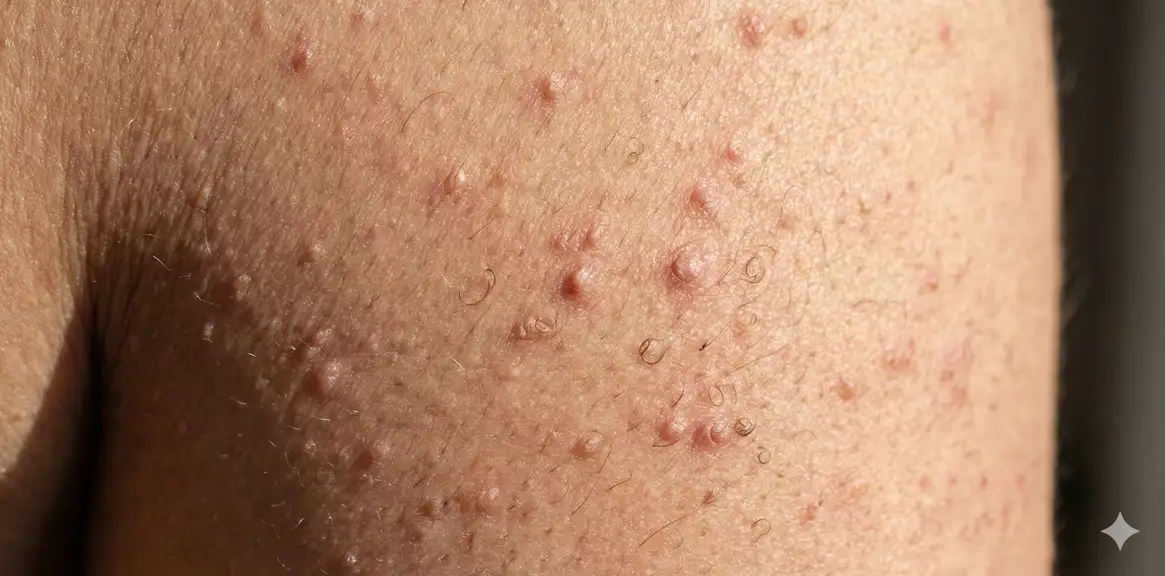
Keratosis pilaris (KP), often called "chicken skin" or "strawberry skin," affects nearly 40% of adults. Those rough, bumpy patches on your upper arms, thighs, or cheeks are caused by keratin buildup that plugs hair follicles. While KP is harmless, many people seek ways to smooth their skin.
Natural loofah sponges—particularly loofahs with the right texture—can be an effective part of your KP management routine. This guide covers how to use loofah safely and effectively to help reduce those stubborn bumps.
Understanding Keratosis Pilaris
Before diving into treatment, it helps to understand what causes KP. The condition occurs when a protein called keratin accumulates and plugs hair follicles, creating those characteristic small bumps. I've had KP on my upper arms since I was a teenager—those rough, sandpapery patches that never seemed to go away no matter what I tried. If you're reading this, you probably know exactly what I'm talking about.
KP often runs in families and is associated with conditions like eczema and allergies, suggesting a genetic component. My mother has it too, and so does my sister. It's harmless but frustrating, especially in summer when you want to wear sleeveless shirts without feeling self-conscious about the texture of your arms.
You may notice that your KP typically worsens in winter when skin is drier, which points to the strong connection between KP and skin hydration—KP and dry skin often occur together. I used to dread winter because my KP would flare up dramatically—those little bumps would become more prominent and sometimes even redder. While there's no permanent cure for keratosis pilaris, the good news is that symptoms can be significantly reduced with consistent treatment—and KP often improves naturally with age. I've found that my KP is probably about 70% better than it was in my twenties, and consistent exfoliation has made the remaining bumps much less noticeable.
Why Loofah Helps with KP
A regular exfoliation routine is one of the cornerstones of KP treatment, and loofah provides gentle mechanical exfoliation that can help in several ways. I tried chemical exfoliants alone for years—lactic acid lotions, salicylic acid body washes—and while they helped, I didn't see real improvement until I started combining them with regular loofah use. The physical action of the loofah seems to dislodge those keratin plugs in a way that chemicals alone just couldn't.
The physical scrubbing action helps remove keratin plugs that block hair follicles, while regular exfoliation smooths the rough "sandpaper" texture that characterizes KP. By removing dead skin cells, loofah also improves product absorption—allowing your treatment moisturizers to penetrate more effectively. I noticed that my lactic acid lotion started working much better once I was properly exfoliating first; it could actually reach the follicles instead of sitting on top of dead skin. Over time, gentle exfoliation can even help reduce the redness often associated with KP, leading to smoother skin with consistent use.
Natural loofah is gentler than synthetic scrubbers and provides more consistent exfoliation. The plant fibers soften when wet, making them ideal for a gentle approach for reactive skin. I made the mistake of using a harsh synthetic scrubber once—the kind with plastic bristles—and my arms were red and irritated for days. Natural loofah, properly softened, gives you exfoliation without the irritation.

Step-by-Step KP Treatment Routine
Follow this routine 2-3 times per week for best results:
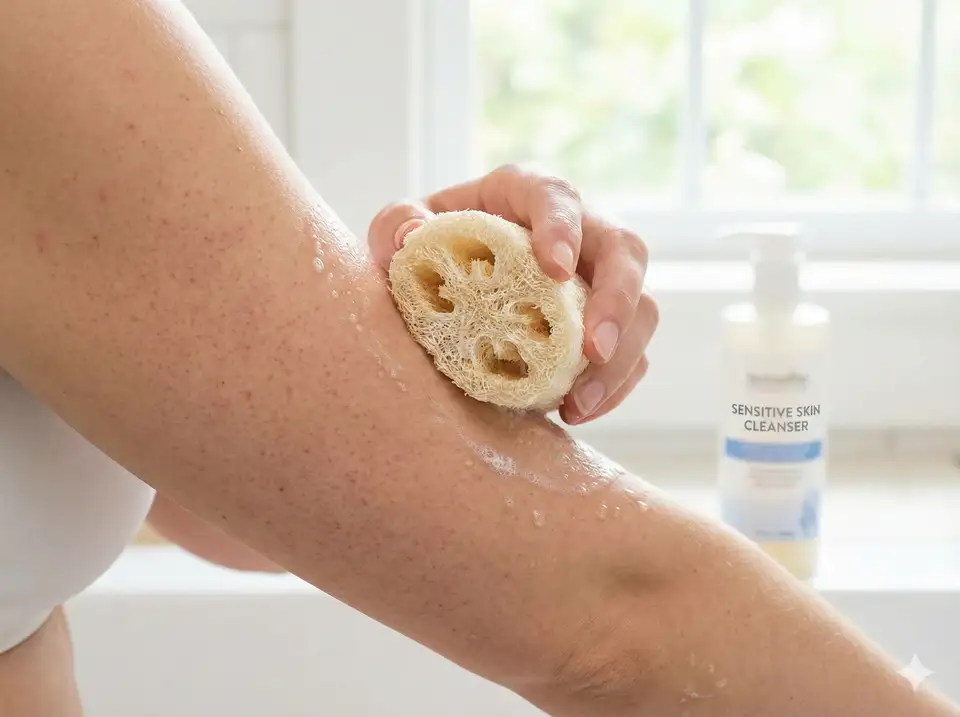
Soak your loofah in warm water for 2-3 minutes until it's completely soft and pliable. A stiff loofah is too harsh for KP-prone skin.
Hot water strips natural oils and can worsen KP. Use lukewarm water and let it soften your skin for 3-5 minutes before exfoliating.
Use a fragrance-free, hydrating body wash. Avoid harsh soaps that can irritate and dry out KP-affected areas.
Using small, circular motions, gently massage the affected areas for 30-60 seconds per area. Let the loofah texture do the work - don't scrub hard.
Rinse thoroughly with lukewarm water. Gently pat skin dry with a soft towel - don't rub, which can irritate freshly exfoliated skin.
Within 3 minutes of showering, apply a keratolytic moisturizer containing urea (10-20%), lactic acid, or salicylic acid to KP areas.
Never pick, squeeze, or scratch KP bumps. This can cause scarring, infection, and hyperpigmentation that's much harder to treat than the original bumps.
Best Products to Use with Loofah for KP
For maximum effectiveness, pair your loofah exfoliation with the right products:
Keratolytic Moisturizers (Apply After)
- Urea creams (10-40%) - Dissolves keratin and hydrates deeply
- Lactic acid lotions - Exfoliates and moisturizes simultaneously
- Salicylic acid products - Penetrates follicles to clear buildup
- Amlactin - Popular OTC option with 12% lactic acid
- CeraVe SA Cream - Combines salicylic acid with ceramides
Gentle Cleansers (Use During)
- Fragrance-free body washes
- Cream-based cleansers
- Oil-based cleansers for very dry skin

Common Mistakes to Avoid
Many people worsen their KP by making these errors—and I've made most of them myself over the years. Learning what NOT to do was almost as important as learning the right routine.
Over-exfoliating is probably the most common mistake. When you first see improvement, it's tempting to think "more is better" and start scrubbing daily. Don't. I tried this once—exfoliating every day for a week—and my KP actually got worse. My skin became irritated and red, and the bumps looked more prominent than before. More than 3 times per week can damage your skin barrier and increase inflammation, making everything worse.
Using hot water feels amazing but strips your skin's natural oils and exacerbates dryness. I know it's hard, especially in winter, but lukewarm water makes a real difference. Hot showers were sabotaging my KP treatment for years before I realized the connection.
Scrubbing too hard seems logical—rougher skin needs rougher treatment, right? Wrong. I used to really work at those bumps, thinking I could scrub them away. All I did was cause irritation, redness, and sometimes even little red marks that took weeks to fade. Gentle pressure and letting the loofah texture do the work is the key.
Skipping moisturizer after exfoliation is a recipe for disaster. Exfoliation without hydration makes KP worse because you're removing the dead skin but not addressing the underlying dryness. The 3-minute rule applies here too—get that keratolytic moisturizer on while your skin is still damp.
Using harsh products with fragrances and sulfates irritates sensitive skin. I wasted money on fancy-smelling body washes that probably made my KP worse. Fragrance-free, gentle formulas are the way to go.
Expecting instant results leads to discouragement and giving up too soon. KP treatment takes 4-8 weeks of consistency—you won't see dramatic changes in a few days. I almost quit after two weeks because I didn't think it was working. Stick with it.

What to Expect: Treatment Timeline
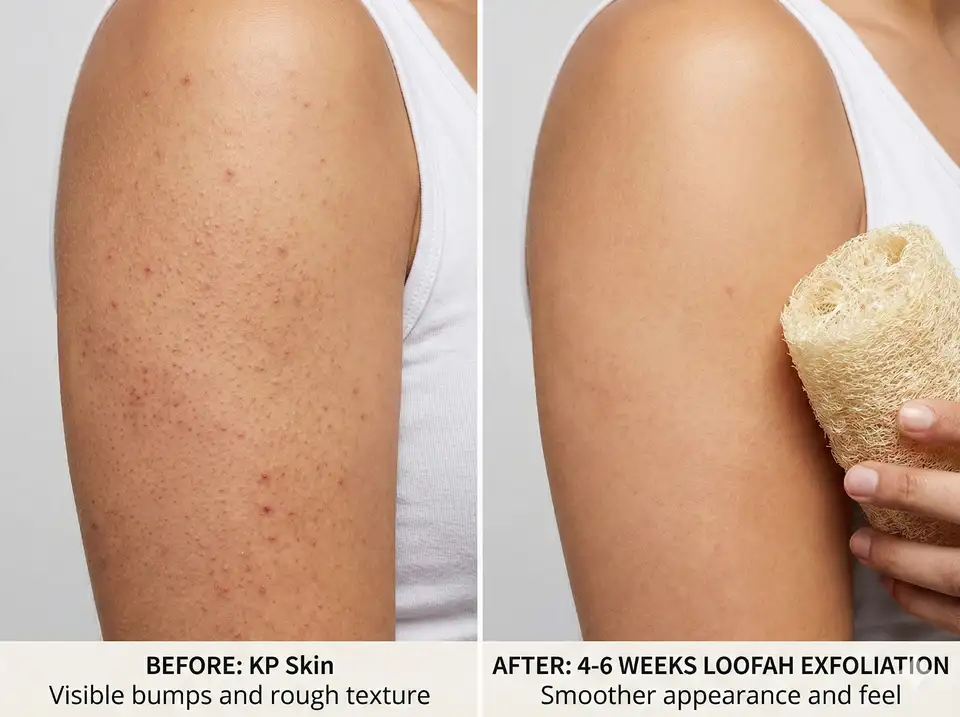
KP treatment requires patience—more than I expected when I first started. I'll be honest: for the first couple of weeks, I wasn't sure if anything was happening at all. But I kept with it, and around week three, I started noticing real changes. Here's what a realistic timeline looks like:
Week 1-2: You might feel like nothing is happening. Your skin may feel slightly smoother immediately after exfoliating, but the bumps are still very much there. This is normal. Don't give up. The changes are happening at the follicle level, you just can't see them yet.
Week 3-4: This is when I first noticed real improvement. The rough "sandpaper" texture starts to feel smoother even between exfoliation sessions. You might also notice that the redness is slightly reduced. This is when it gets encouraging.
Week 5-6: The bumps themselves start to flatten and become less prominent. Other people probably won't notice yet, but you will. Running your hand over the affected areas, you'll feel a difference. I remember being excited to realize that I could barely feel the bumps on my upper arms for the first time in years.
Week 7-8: Significant improvement in both appearance and texture. This is when I felt comfortable wearing sleeveless shirts again without being self-conscious. The bumps aren't completely gone (they may never be), but they're so much less noticeable.
Ongoing maintenance: Here's the thing nobody tells you upfront—you can't just stop once your KP improves. Be sure to keep your loofah sanitary as you continue your routine. If you quit the routine, the bumps will come back within a few weeks. I learned this the hard way when I got lazy during a vacation. Think of your loofah routine as ongoing maintenance rather than a one-time cure. The good news is that once you've got it under control, maintaining is easier than the initial improvement phase.
KP will return if you stop treatment. I've tested this accidentally—skip a few weeks and the bumps come right back. Think of your loofah routine as ongoing maintenance rather than a one-time cure. Once you're in the habit, it only takes a few extra minutes in the shower.

When to See a Dermatologist
While loofah and OTC treatments work for most people, see a dermatologist if:
- No improvement after 8-12 weeks of consistent treatment
- KP is causing significant emotional distress
- Bumps become infected, painful, or very inflamed
- You're unsure if it's actually KP (could be eczema, psoriasis, or folliculitis)
Dermatologists can prescribe stronger treatments like tretinoin, higher concentration acids, or laser therapy for stubborn cases.
Related Guides
Recommended Products
Almooni Egyptian Loofah Bath Sponges (3-Pack)
Premium thick-fiber natural loofahs - gentle exfoliation for all skin types - lasts 3-4 weeks each
Buy on Amazon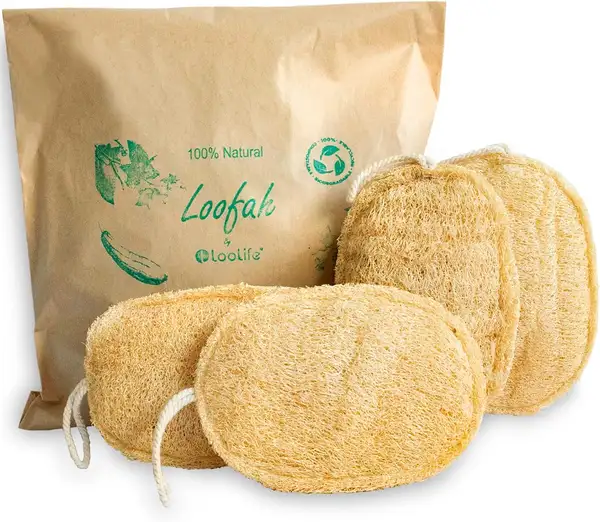
Natural Loofah Exfoliating Sponges (4-Pack)
100% organic biodegradable bath sponges - plastic-free alternative that's gentle on skin and planet
Buy on AmazonAs an Amazon Associate, we earn from qualifying purchases.