
For thousands of years, people have used natural loofah sponges (also spelled luffa) for bathing and skin care. What ancient cultures discovered intuitively, modern dermatology has confirmed: regular, gentle exfoliation provides measurable benefits for skin health, appearance, and function.
Natural loofah offers a sustainable, effective alternative to plastic exfoliating tools and harsh chemical scrubs. Made from the dried fibrous interior of the loofah gourd plant, these biodegradable sponges provide mechanical exfoliation that works with your skin's natural renewal process rather than against it.
In this comprehensive guide, we'll explore the science-backed benefits of loofah for skin, who should and shouldn't use it, and how to maximize results while maintaining skin health. Whether you're dealing with rough patches, ingrown hairs, or simply want smoother skin, understanding loofah's dermatological benefits will help you make informed choices about your skincare routine.
How Exfoliation Improves Skin Health
To understand why loofah benefits skin, it helps to understand the science of exfoliation and your skin's natural renewal cycle.
Human skin completely renews itself approximately every 28 days through a process called desquamation. Your body continuously produces new skin cells in the deepest layer of the epidermis, which gradually move upward over several weeks. When these cells reach the skin's surface, they're dead and naturally shed to make room for fresh cells underneath.
In young, healthy skin, this process happens efficiently without intervention. However, several factors can disrupt the natural shedding cycle: aging (cell turnover slows from 28 days in your 20s to 45-60 days in your 50s and beyond), sun damage, dry skin, certain skin conditions, and environmental factors like pollution.
When dead cells accumulate on the skin's surface, they create a dull, rough texture and can trap oil and bacteria in pores. This buildup also forms a barrier that prevents skincare products from penetrating effectively. This is where proper exfoliation techniques become essential for maintaining healthy, glowing skin.
Exfoliation removes this layer of dead cells, revealing fresher skin beneath. Loofah provides mechanical exfoliation—physical scrubbing that removes dead cells through gentle friction. The fibrous structure of natural loofah creates an ideal texture: firm enough to remove dead cells but flexible enough to avoid excessive abrasion when used with proper technique.
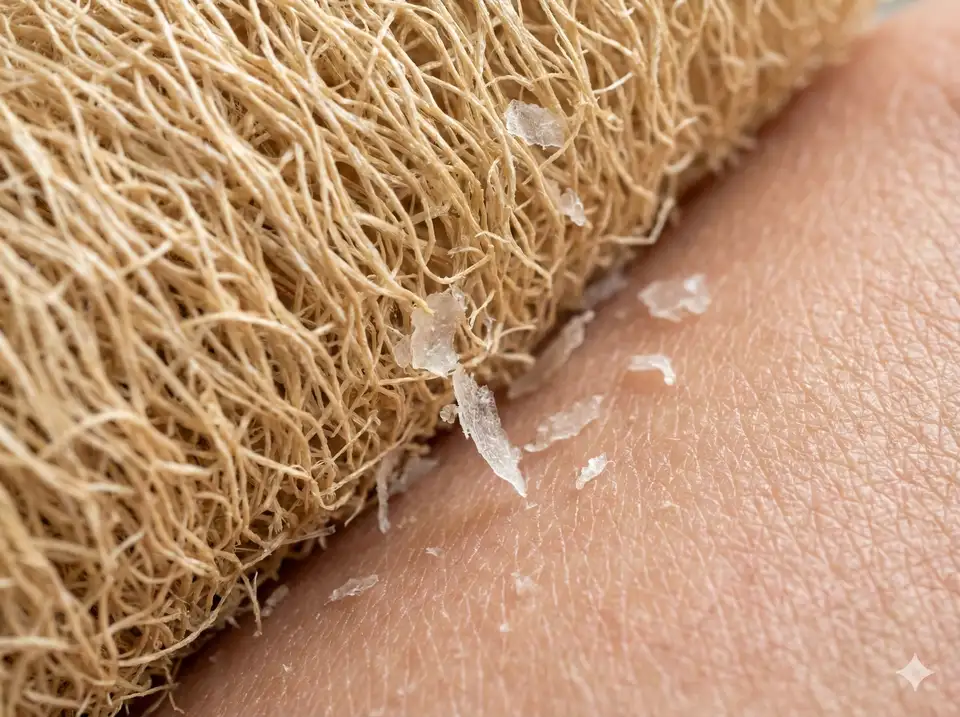
Top Skin Benefits of Using Loofah
Regular loofah use provides multiple evidence-based benefits for skin health and appearance. Here are the primary advantages supported by dermatological research:
Improved Blood Circulation
The massaging action of using a loofah stimulates blood flow to the skin's surface. Increased circulation brings fresh oxygen and nutrients to skin cells while removing metabolic waste products. This enhanced blood flow gives skin a healthy, natural glow and supports the skin's repair and renewal processes.
Studies on massage and mechanical stimulation show that gentle, repeated pressure increases dermal blood flow by 20-30%. This improved circulation may also support collagen production over time, contributing to firmer, more resilient skin.
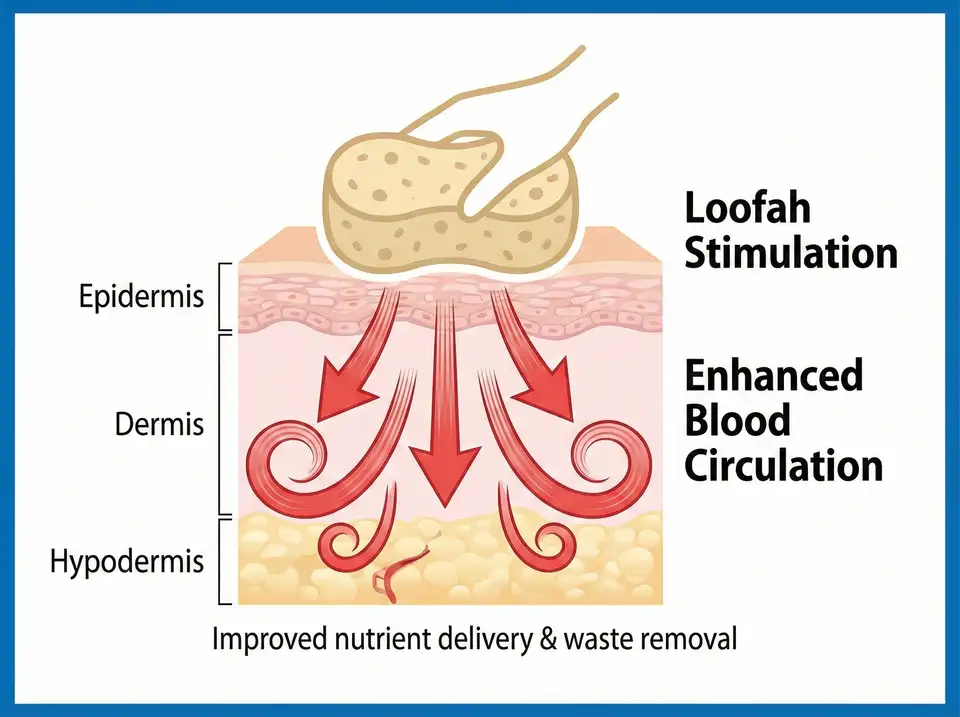
Smoother, Softer Skin Texture
By removing the rough, dead cell layer, loofah reveals the smoother, fresher skin beneath. This immediate textural improvement is one of the most noticeable benefits. Areas prone to roughness—elbows, knees, heels, and backs of arms—respond particularly well to regular exfoliation.
Research published in the International Journal of Cosmetic Science found that regular mechanical exfoliation significantly improved skin smoothness scores in blind tactile testing, with benefits accumulating over 4-6 weeks of consistent use.
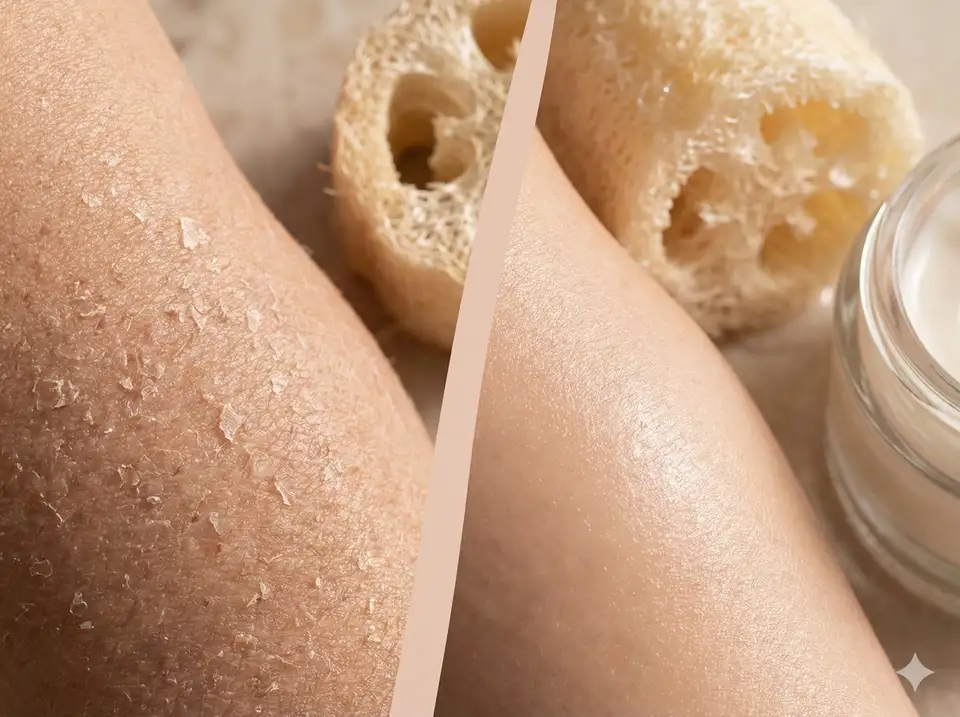
Unclogging Pores and Preventing Breakouts
Dead skin cells mixed with sebum (skin oil) can block pores, creating blackheads and whiteheads and creating conditions for bacterial growth. While facial skin requires gentler treatment, body acne on the back, chest, and shoulders benefits from loofah exfoliation.
The mechanical action helps keep pores clear by removing the surface debris that can trap oil and bacteria. For those prone to body breakouts, incorporating loofah into your shower routine—paired with appropriate cleansers—can reduce the frequency and severity of blemishes.
Reducing Ingrown Hairs
Ingrown hairs occur when hair grows back into the skin instead of emerging from the follicle. This is particularly common after shaving, waxing, or other hair removal methods. The condition can cause painful, inflamed bumps that may become infected.
Regular exfoliation with loofah helps prevent ingrown hairs by clearing the follicle opening of dead cells that can trap hair beneath the surface and by gently buffing to help existing ingrown hairs work their way out. For best results, use your loofah 1-2 days before and 2-3 days after hair removal. Avoid exfoliating immediately after hair removal, as skin is more sensitive during this time.
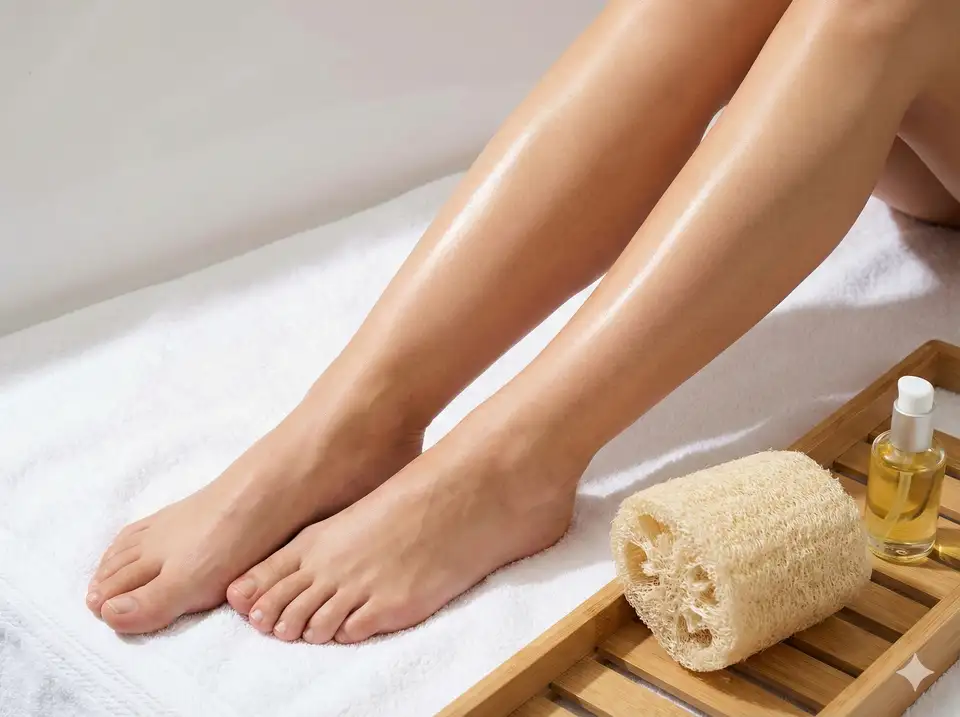
Helping with Keratosis Pilaris
Keratosis pilaris (KP), often called "chicken skin," affects 40-50% of adults. This harmless but cosmetically bothersome condition causes small, rough bumps—usually on upper arms, thighs, buttocks, and sometimes cheeks—due to keratin buildup around hair follicles.
While there's no cure for KP, regular gentle exfoliation is one of the most effective management strategies. Loofah helps by removing the keratin plugs that create the characteristic bumps, smoothing the rough texture associated with KP, and improving the effectiveness of moisturizers and KP-specific treatments.
For KP, consistency matters more than intensity. Gentle daily or every-other-day use typically works better than aggressive weekly scrubbing. Follow exfoliation immediately with a rich moisturizer containing urea, lactic acid, or salicylic acid to maintain smoothness.
- Wet your skin first: Always use loofah on wet or damp skin, never dry (except for dry brushing)
- Use gentle pressure: Let the loofah's texture do the work; excessive pressure causes irritation
- Move in circular motions: Use small circles rather than harsh back-and-forth scrubbing
- Follow with moisturizer: Apply body lotion or oil immediately after exfoliating to lock in hydration
- Soften if needed: New loofahs can be stiff; soak in warm water for a few minutes to soften
Dry Brushing Benefits with Loofah
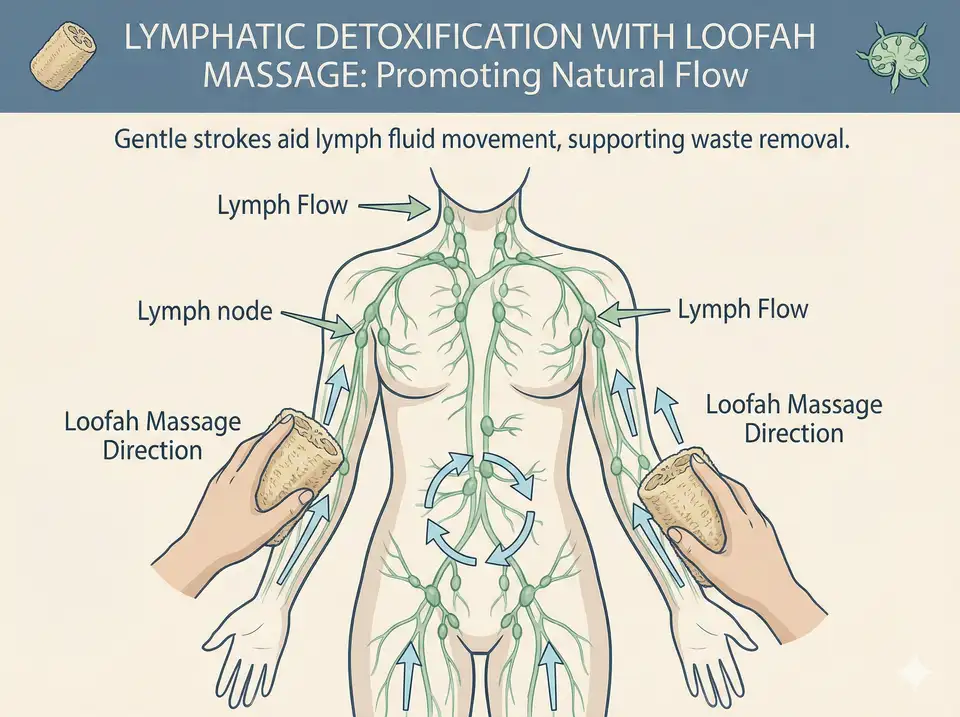
While most people use loofah wet in the shower, dry brushing—using the loofah on dry skin before bathing—has gained popularity for additional benefits related to lymphatic drainage and circulation.
The lymphatic system is a network of tissues and organs that help rid the body of toxins and waste. Unlike the circulatory system, the lymphatic system doesn't have a pump and relies on muscle contractions and body movement to function. Dry brushing is thought to stimulate lymphatic drainage, though scientific evidence for this claim is limited.
- Start at your feet: Always brush toward the heart, following lymphatic flow
- Use long, sweeping strokes: Brush up legs, from wrists to shoulders on arms
- Use circular motions on torso: Gentle circles on stomach (clockwise), back, and chest
- Apply light pressure: Skin should be slightly pink but never red or irritated
- Shower afterward: Rinse away dead cells and follow with body oil
- Enhanced exfoliation: More effective dead cell removal than wet brushing
- Energizing effect: Many report feeling invigorated after dry brushing
- Improved skin texture: Particularly effective for rough, bumpy skin
- Possible lymphatic support: While research is limited, gentle massage toward the heart may support lymph flow
Note: Claims about cellulite reduction and toxin elimination lack scientific support, though improved circulation may temporarily improve skin appearance.
For dry brushing, choose a loofah with a long handle or use a handheld loofah on a strap to reach your back. Dry brushing 2-3 times per week is sufficient; daily dry brushing may be too much for sensitive skin types.
Natural vs Synthetic: Why Natural Loofah Is Gentler
Not all exfoliating sponges are created equal. While synthetic alternatives may seem similar, natural loofah offers distinct advantages for skin health and environmental sustainability.
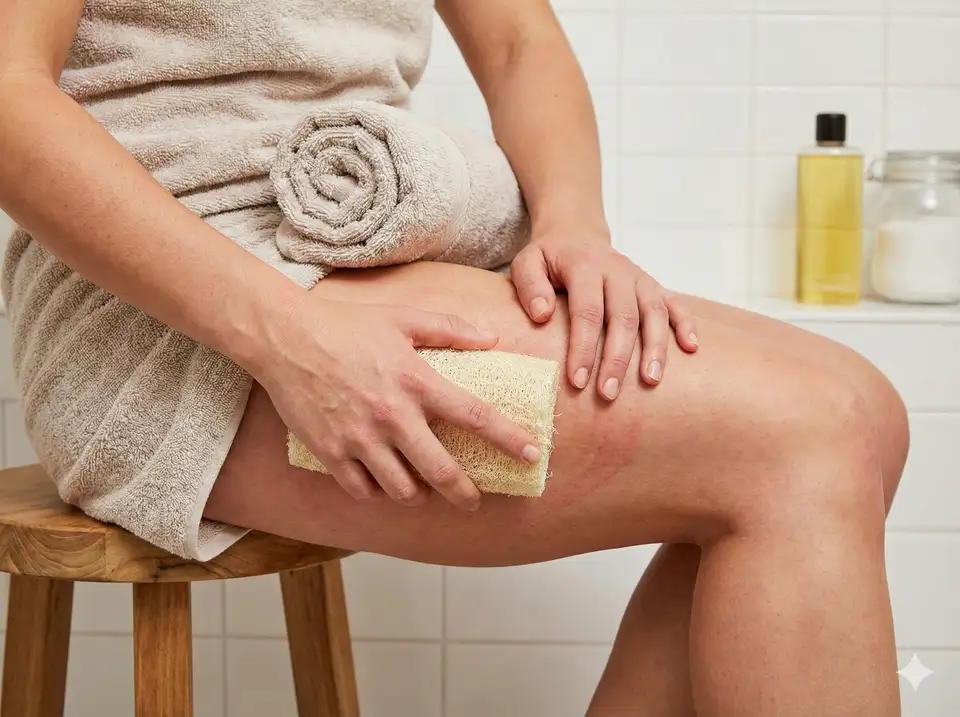
Natural loofah's fibrous structure provides the ideal exfoliation texture: firm enough to remove dead cells effectively but flexible enough to conform to body contours without causing micro-abrasions. The plant fibers have a slight natural roughness that's consistent throughout the sponge.
In contrast, many synthetic exfoliating products use irregular plastic particles or overly abrasive nylon netting. Some studies have shown that certain synthetic scrub beads can create microscopic tears in skin, potentially increasing irritation and bacterial entry points.
Natural loofah also lacks the chemical additives, dyes, and processing agents found in many synthetic bath products. For people with sensitive skin or chemical sensitivities, this natural simplicity offers a clear advantage. Additionally, natural loofah is 100% biodegradable and compostable, decomposing in 2-6 months compared to 500+ years for plastic alternatives.
For a detailed comparison and guidance on choosing the right exfoliating tool, see our complete guide on loofah vs synthetic exfoliating tools.
Who Should and Shouldn't Use Loofah
While loofah benefits most skin types, certain conditions and circumstances require modified use or alternatives.
- Normal to oily skin: Can handle regular exfoliation without excessive dryness
- Keratosis pilaris: Benefits significantly from consistent gentle exfoliation
- Ingrown hair prone: Regular use helps prevent and release trapped hairs
- Body acne: Helps keep pores clear on back, chest, and shoulders
- Rough skin patches: Elbows, knees, heels respond well to loofah treatment
- Self-tanner users: Exfoliation before application ensures even color
- Very sensitive skin: Use softer loofah or reduce frequency to once weekly
- Active eczema or psoriasis: Avoid during flares; may use gently during remission periods
- Rosacea: Skip facial use; body use may be okay if skin tolerates it
- Open wounds or cuts: Avoid the affected area completely until healed
- Sunburned skin: Wait until skin has completely healed before resuming
- Recent procedures: Avoid for 2-4 weeks after waxing, laser, or chemical peels
- Extremely dry skin: Use less frequently and follow immediately with rich moisturizer
Learn more about adapting loofah use for different skin types in our sensitive skin guide.
Skin Conditions That Benefit from Loofah Exfoliation
Several specific dermatological conditions show improvement with regular, appropriate loofah use. Keratosis pilaris is one of the conditions that responds best to loofah exfoliation, as the gentle mechanical action helps clear the keratin plugs without causing inflammation. Combine loofah exfoliation with keratolytic moisturizers containing urea, lactic acid, or salicylic acid for optimal results.
Folliculitis (inflammation of hair follicles) and pseudofolliculitis barbae (razor bumps) also benefit from regular gentle exfoliation, which keeps follicles clear and prevents ingrown hairs. However, avoid exfoliating active infections and wait until inflammation subsides.
For hyperkeratosis (thickened skin including calluses and corns on feet), while severe cases may require professional treatment, mild hyperkeratosis responds well to regular loofah use, particularly on heels and balls of feet. Soak feet first, then use circular motions with the loofah, and follow with a foot cream containing urea.
Scientific Backing for Exfoliation Benefits
While ancient cultures used natural exfoliation empirically, modern dermatological research has provided scientific validation for many traditional practices.
Research published in the British Journal of Dermatology demonstrated that regular mechanical exfoliation increases epidermal cell turnover rates. The study found that consistent exfoliation stimulated the production of new cells in the basal layer, effectively "training" skin to renew itself more efficiently.
Studies using fluorescent markers have shown that removing the stratum corneum (the outermost dead cell layer) can increase the penetration of topical products by 20-40%. This means moisturizers, serums, and treatment products work more effectively on properly exfoliated skin.
Some research suggests that the mechanical stimulation from exfoliation may trigger fibroblasts (cells that produce collagen) to increase collagen production. While the effect is modest compared to professional treatments, regular gentle massage and exfoliation appears to support skin's structural proteins over time.
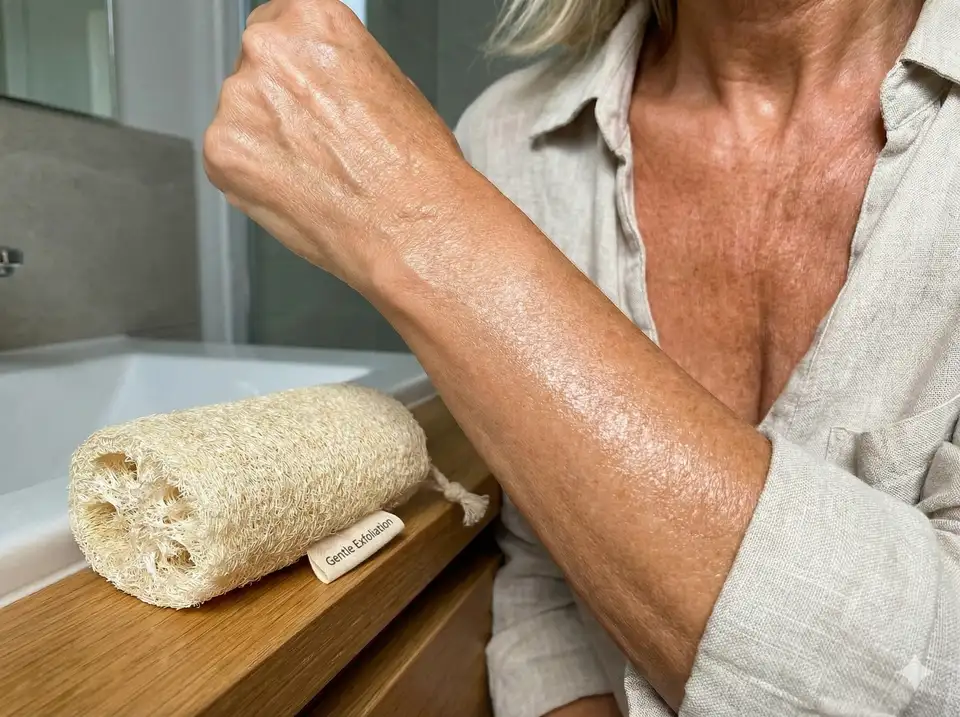
Paradoxically, appropriate exfoliation appears to strengthen skin's barrier function rather than weaken it. Research in the Journal of Investigative Dermatology found that controlled desquamation triggers enhanced production of barrier lipids, provided skin is properly moisturized after exfoliation.
Proper Loofah Care for Skin Safety
To maximize skin benefits and minimize risks, proper loofah hygiene is essential. Natural loofahs provide the ideal environment for bacterial growth if not properly maintained.
After each use, rinse thoroughly with hot water to remove all soap residue, squeeze out excess water completely, and hang in a well-ventilated area to air dry (not in shower if possible). Never store wet in a closed container or leave sitting in water.
For weekly deep cleaning, soak in diluted bleach solution (1 tablespoon per gallon) for 5 minutes, or microwave while wet for 30 seconds to kill bacteria, or soak in white vinegar for 30 minutes. Rinse thoroughly and allow to dry completely.
Replace your natural loofah when you notice persistent odor even after cleaning, discoloration with dark spots or patches that won't rinse away, changed texture (becomes slimy, excessively soft, or starts to disintegrate), or after 3-4 weeks even with perfect care.
For complete care instructions, see our loofah cleaning and care guide.
- Frequency matters: 2-3 times per week is optimal for most people; daily use may cause irritation
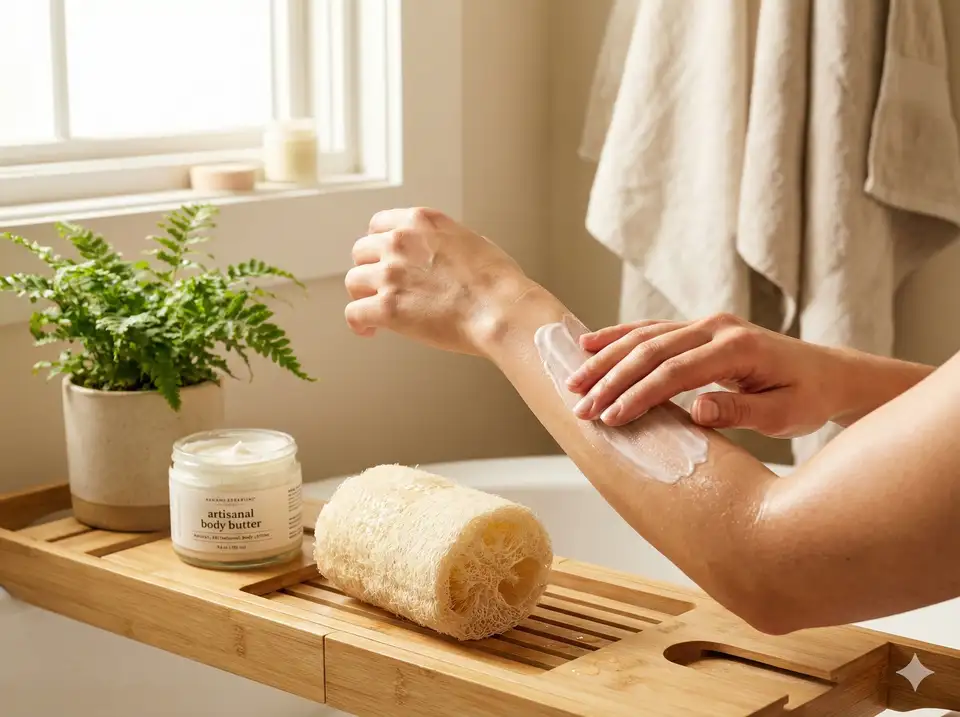
- Moisture is essential: Always follow exfoliation with moisturizer to support barrier repair
- Gentle pressure only: Research shows gentle exfoliation is as effective as aggressive scrubbing with less irritation risk
- Consistency beats intensity: Regular moderate use produces better long-term results than occasional harsh exfoliation
The Bottom Line on Loofah Skin Benefits
Natural loofah provides science-backed benefits for skin health when used appropriately. Regular, gentle exfoliation removes dead cells, improves circulation, helps prevent ingrown hairs, manages conditions like keratosis pilaris, and creates smoother, more radiant skin.
The key to success is consistency over intensity. Gentle use 2-3 times per week with proper moisturizing afterward produces better long-term results than aggressive weekly scrubbing. Natural loofah's biodegradable, chemical-free composition makes it an excellent choice for those seeking sustainable, effective skincare solutions.
For most skin types, incorporating a natural loofah into your bathing routine is a simple, affordable way to support your skin's natural renewal process. Combined with proper hygiene practices and appropriate moisturizing, loofah exfoliation can be a valuable component of a comprehensive skincare approach.
Interested in growing your own loofahs? Check out our complete guide to growing loofah at home for a truly sustainable, from-garden-to-shower experience.
Continue Learning About Loofah
Recommended Products
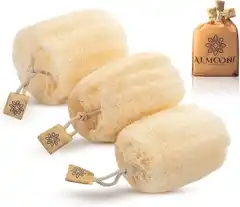
Almooni Egyptian Loofah Bath Sponges (3-Pack)
Premium thick-fiber natural loofahs - gentle exfoliation for all skin types - lasts 3-4 weeks each
Buy on Amazon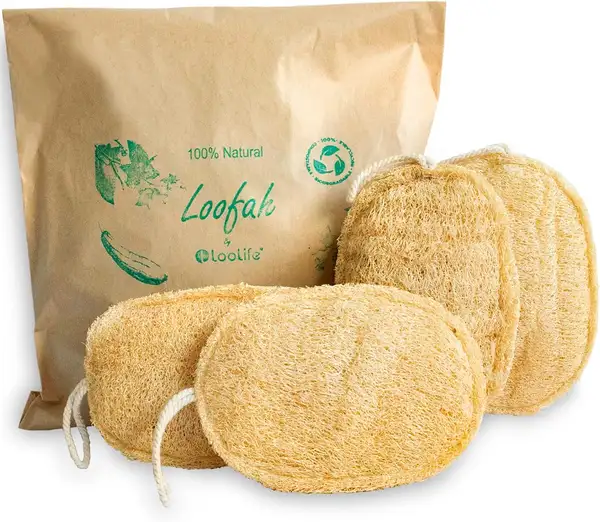
Natural Loofah Exfoliating Sponges (4-Pack)
100% organic biodegradable bath sponges - plastic-free alternative that's gentle on skin and planet
Buy on AmazonAs an Amazon Associate, we earn from qualifying purchases.