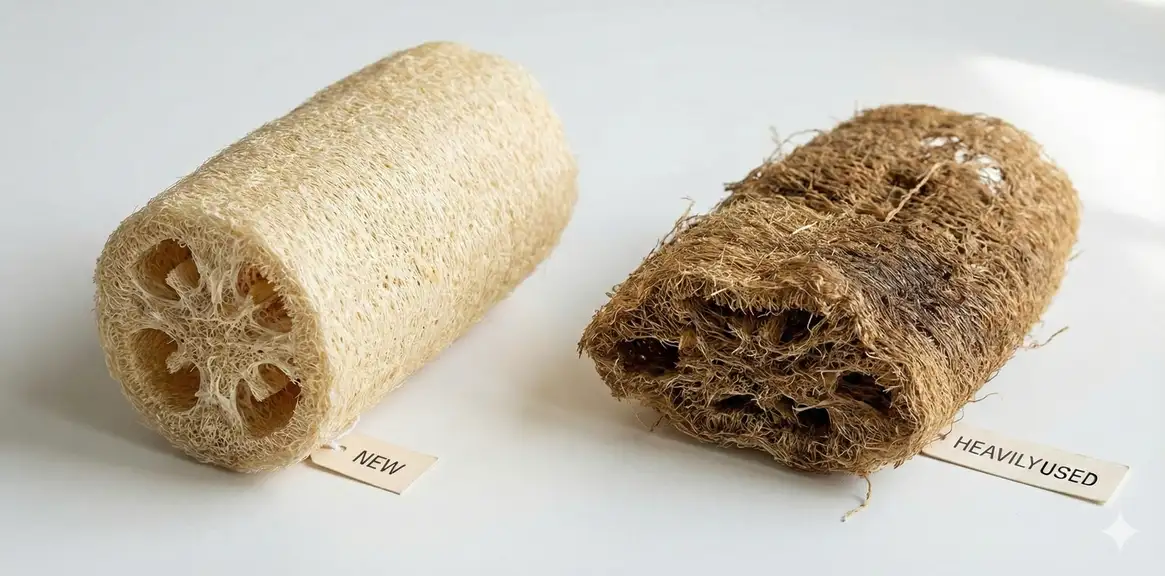
Natural loofah sponges are an excellent eco-friendly choice for bathing and cleaning, but they don't last forever. For a loofah durability comparison, natural loofahs are organic and biodegradable, which means they'll eventually break down, even with proper care. Knowing when to replace your loofah is crucial for maintaining hygiene and getting the best exfoliation results.
In this comprehensive guide, you'll learn the ideal replacement timeline for different loofah uses, visual and sensory signs that indicate it's time for a new sponge, and practical tips to extend your loofah's lifespan. Plus, we'll cover what to do with old loofahs—you can compost your old loofah when it's time.
General Replacement Timeline
The lifespan of a loofah sponge depends primarily on how you use it and how well you maintain it. Here are the standard replacement guidelines:
Recommended replacement: Every 3-4 weeks
Bath loofahs are exposed to warm, humid conditions that promote bacterial growth. Even with proper care extends lifespan, but the porous structure eventually harbors bacteria over time.
- Daily use: Replace every 3 weeks
- 2-3 times per week: Replace every 4-6 weeks
- Weekly use: Replace every 2-3 months
Recommended replacement: Every 2-4 weeks
Kitchen loofahs encounter food particles, grease, and bacteria from dishes, making them the fastest to deteriorate and potentially the most unsanitary if not replaced regularly.
- Daily dishwashing: Replace every 2 weeks
- Occasional use: Replace every 3-4 weeks
- Heavy-duty scrubbing: May need weekly replacement

Visual Signs of Deterioration
Your eyes can tell you a lot about whether your loofah needs replacing. Watch for these visible indicators:
Natural loofahs start out a light tan or cream color. Over time, they'll darken to brown or gray. This discoloration happens due to:
- Mineral deposits: Hard water leaves residue that stains fibers
- Soap buildup: Residual soap accumulates and changes color
- Oxidation: Natural aging of organic fibers
- Mold growth: Dark patches indicate bacterial or fungal growth
Action: If your loofah is significantly darker than when new, especially if it has dark spots or patches, replace it immediately.
Black, green, or brown spots on your loofah are signs of mold or mildew growth. This happens when loofahs don't dry completely between uses.
- Health risk: Mold can cause skin irritation and respiratory issues
- Cannot be cleaned: Once mold sets in, sanitizing won't fully eliminate it
- Spreads quickly: Mold spores multiply rapidly in moist environments
Action: Discard any loofah with visible mold immediately. Do not attempt to salvage it.

Smell Indicators
Your nose is one of the best tools for determining loofah hygiene. A clean, dry loofah should have little to no odor.
If your loofah smells musty, sour, or has any unpleasant odor even when dry, it's time to replace it. This smell indicates:
- Bacterial colonization: Bacteria produce odor compounds as they multiply
- Trapped moisture: Water retention creates ideal conditions for microbes
- Organic decay: The loofah fibers are beginning to break down
The smell test: Pick up your dry loofah and smell it closely. If it doesn't smell neutral or slightly earthy, replace it.
Texture Changes
How your loofah feels can reveal a lot about its condition and effectiveness—a fresh loofah for best results is essential for proper exfoliation.
As loofahs age, the fibrous structure weakens and begins to break down:
- Fiber shedding: Loose strands come off during use
- Holes or tears: Structural integrity is compromised
- Crumbling: The loofah feels brittle and pieces break off
- Loss of shape: No longer maintains its original form
Impact: A deteriorating loofah becomes less effective for exfoliation and can leave debris on your skin.
Loofahs naturally soften with use, but excessive softness or a slimy texture indicates problems:
- Biofilm formation: Slimy texture from bacterial colonies
- Over-saturation: Fibers have absorbed too much moisture
- Soap residue buildup: Excessive product accumulation
- Fiber degradation: Natural breakdown of cellulose structure
When it matters: If your loofah feels slippery even when dry, or no longer provides adequate exfoliation, it's time for a replacement.
Hygiene Concerns
Even if your loofah looks and smells fine, microscopic bacteria can still accumulate. Understanding the hygiene risks helps you make informed replacement decisions.
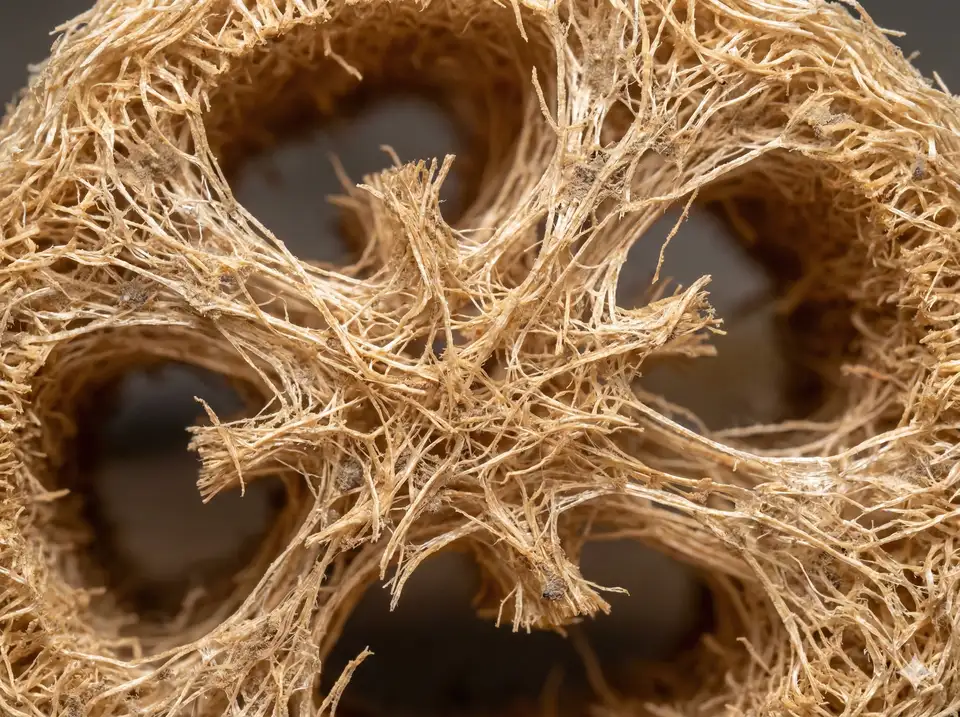
Research shows that loofahs can harbor significant bacterial populations after just a few weeks of use. The warm, moist bathroom environment creates ideal conditions for bacterial growth, while dead skin cells trapped in the fibers provide nutrients for microorganisms to thrive.
The loofah's porous structure, which makes it excellent for exfoliation, also allows bacteria to become trapped deep within the fibers where rinsing can't reach. Common bacteria found in used loofahs include Pseudomonas, Staphylococcus, and other potentially harmful species.
For most healthy individuals, the risk from bacterial exposure is low. However, those with compromised immune systems, open wounds, or sensitive skin should be extra vigilant about replacement schedules.
Extending Loofah Lifespan
While regular replacement is necessary, proper care can help you get the maximum safe use from each loofah. For detailed maintenance instructions, see our complete loofah cleaning and care guide.
- Rinse thoroughly after each use: Remove all soap, dead skin, and debris
- Wring out excess water: Squeeze firmly to remove as much moisture as possible
- Dry completely between uses: Hang in a well-ventilated area, not in the shower
- Sanitize weekly: Soak in diluted vinegar solution or microwave damp for 30 seconds
- Avoid prolonged moisture: Never leave loofah in standing water or sealed containers
- Store in dry location: Keep away from the shower stream when not in use
- Rotate between two loofahs: Allows each one to dry completely between uses

Bath vs. Kitchen Loofah Differences
The replacement timeline differs between bath and kitchen loofahs due to their different uses and exposure to contaminants.
| Factor | Bath Loofah | Kitchen Loofah |
|---|---|---|
| Replacement Frequency | 3-4 weeks | 2-4 weeks |
| Primary Contaminants | Dead skin cells, bacteria, soap residue | Food particles, grease, raw meat bacteria |
| Environment | Warm, humid bathroom | Kitchen sink area, variable moisture |
| Hygiene Priority | High - direct skin contact | Very High - food safety concerns |
| Warning Signs | Odor, discoloration, loss of texture | Food particles trapped, grease buildup, smell |
| Care Requirements | Daily drying, weekly sanitizing | Daily sanitizing, immediate drying after use |

What to Do With Old Loofahs
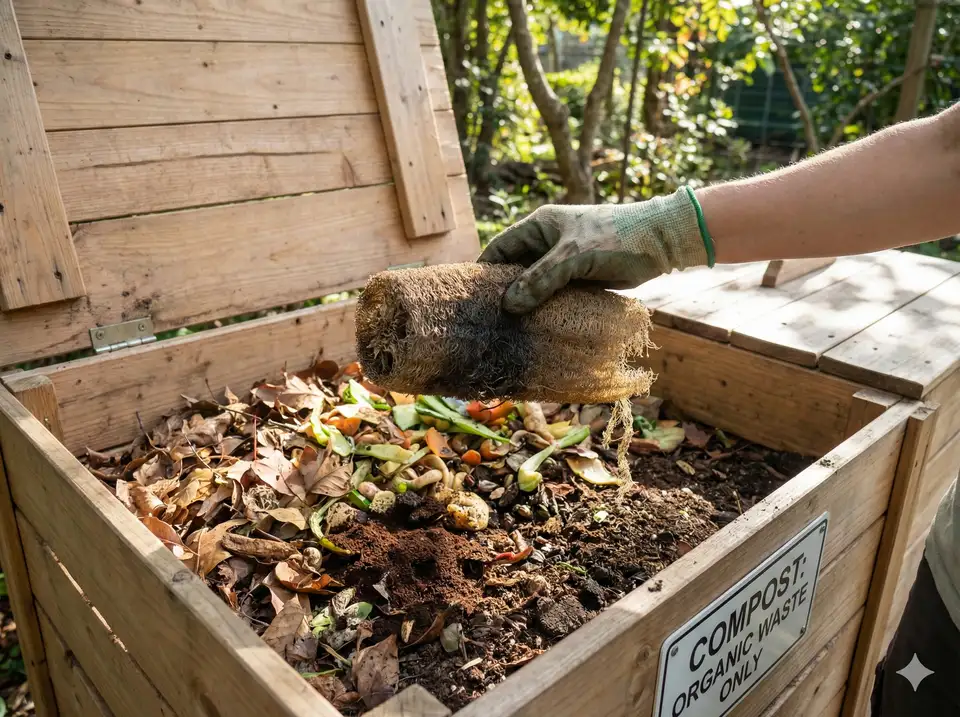
One of the best aspects of natural loofahs is that they're completely biodegradable. Instead of sending them to landfill, you can compost them sustainably.
Natural loofahs are made from 100% plant fibers (Luffa aegyptiaca or Luffa acutangula), making them perfect for composting:
- Cut into small pieces: Smaller chunks decompose faster
- Add to compost bin: Mix with other green and brown materials
- Decomposition time: 4-6 months in active compost
- Soil amendment: Provides organic matter and improves soil structure
For detailed composting instructions and creative uses for old loofahs, visit our complete loofah composting guide.
- Garden scrubbers: Clean garden tools and pots before composting
- Craft projects: Use in nature-themed decorations or wreaths
- Mulch: Shred and use as biodegradable mulch for plants
- Seed starters: Cut into sections for starting seedlings
- Bath mat backing: Place under bath mat for drainage

Setting a Replacement Schedule
The best way to ensure hygienic loofah use is to establish a consistent replacement routine. Here's how to create a system that works for you:
- Mark your calendar: Set monthly reminders for loofah replacement
- Buy multipacks: Stock up on quality replacements for easy rotation
- Date your loofah: Write the start date with permanent marker
- Link to other habits: Replace on the 1st of each month or with other routines
- Visual reminder: Keep new loofahs visible so you remember they're available
- Subscribe and save: Set up automatic deliveries for hassle-free replacement
Growing Your Own Supply
For the ultimate sustainable solution, consider growing your own—you'll have an endless supply when you grow your own at home. A single vine can produce 10-20 loofahs per season, giving you a continuous, free supply.
Growing your own loofahs means you'll never worry about running out. A single seed packet can provide years of sponges, making it an incredibly cost-effective choice for your bathroom and kitchen. You'll also know exactly what's in your loofah—100% natural, homegrown plant fiber with no synthetic additives or unknown processing chemicals.
From an environmental standpoint, homegrown loofahs are fully compostable and come with zero packaging waste. Many gardeners also find the process genuinely enjoyable—loofah vines produce beautiful yellow flowers and interesting elongated fruit that make great conversation pieces. With an abundant harvest, you can even share homegrown loofahs with friends and family as thoughtful, eco-friendly gifts.
Learn everything you need to know in our comprehensive guide to growing loofah from seed.
Continue Learning About Loofah Care
Recommended Products
Almooni Egyptian Loofah Bath Sponges (3-Pack)
Premium thick-fiber natural loofahs - gentle exfoliation for all skin types - lasts 3-4 weeks each
Buy on Amazon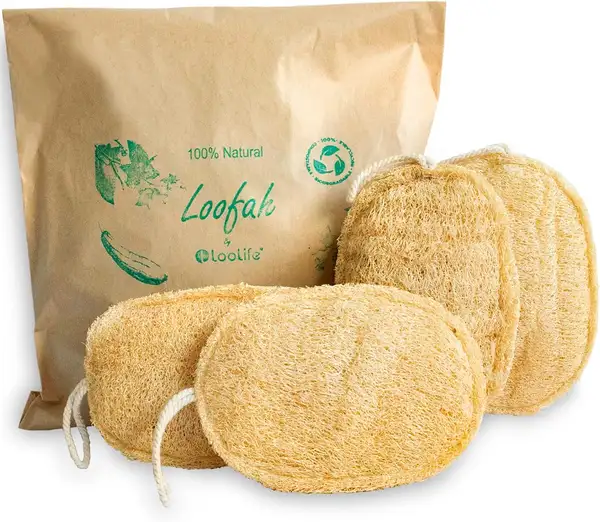
Natural Loofah Exfoliating Sponges (4-Pack)
100% organic biodegradable bath sponges - plastic-free alternative that's gentle on skin and planet
Buy on AmazonAs an Amazon Associate, we earn from qualifying purchases.